Yoga is one of the world’s oldest spiritual and wellness traditions, originating in ancient India thousands of years ago. The word Yoga comes from the Sanskrit root “Yuj”, meaning to unite, symbolizing the union of body, mind, and soul. Ancient yoga was not merely physical exercise; it was a holistic system designed for self-realization, inner peace, and liberation (moksha).
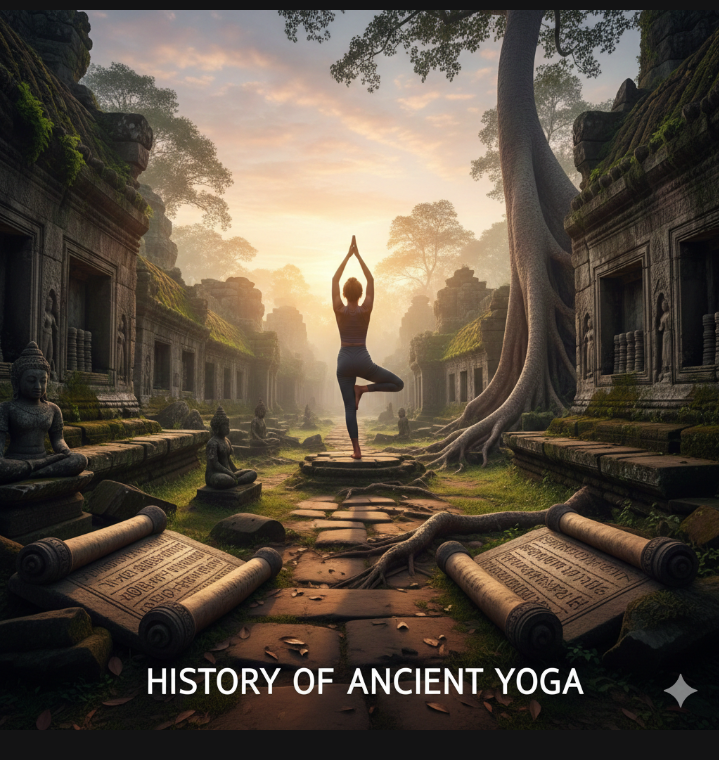
Origins of Yoga
1. Pre-Vedic Period (Indus Valley Civilization)
Archaeological evidence from the Indus Valley Civilization (around 3000–2500 BCE) suggests early yogic practices. Seals depicting figures in meditative postures indicate that meditation and breath control were already in use.
2. Vedic Period
Yoga philosophy is deeply rooted in the Vedas, especially the Rig Veda. During this time, yoga was associated with rituals, sacrifices, and disciplined living. Concepts like pranayama, meditation, and mantra chanting evolved during this era.
Upanishadic Era
The Upanishads marked a significant shift from ritualistic practices to philosophical inquiry. They emphasized:
- Inner consciousness
- Meditation (Dhyana)
- Self-knowledge (Atma Jnana)
NOTE :-
Yoga became a path to understanding the true nature of the self and ultimate reality (Brahman).
Classical Period – Patanjali’s Yoga Sutras
The classical foundation of yoga was systematized by Maharshi Patanjali (around 200 BCE–400 CE) in the Yoga Sutras. He defined yoga as:
“Yogah Chitta Vritti Nirodhah”
(Yoga is the cessation of fluctuations of the mind)
Patanjali introduced the Ashtanga Yoga (Eightfold Path):
- Yama (ethical discipline)
- Niyama (self-discipline)
- Asana (posture)
- Pranayama (breath control)
- Pratyahara (withdrawal of senses)
- Dharana (concentration)
- Dhyana (meditation)
- Samadhi (ultimate absorption)
Post-Classical Period
During this phase, yoga expanded beyond meditation to include physical purification techniques. Important texts include:
- Bhagavad Gita – Karma Yoga, Bhakti Yoga, Jnana Yoga
- Hatha Yoga Pradipika
- Gheranda Samhita
NOTE :-
Hatha Yoga emphasized body cleansing, strength, and energy balance (kundalini).
Modern Revival of Yoga
In the late 19th and 20th centuries, yoga gained global recognition through great masters like:
- Swami Vivekananda
- Sri Aurobindo
- T. Krishnamacharya
- B.K.S. Iyengar
- Pattabhi Jois
- Baba Ramdev
Yoga transformed into a global wellness practice while retaining its spiritual essence.
Importance of Ancient Yoga Today
Ancient yoga remains relevant in modern life by helping:
- Reduce stress and anxiety
- Improve physical health
- Enhance mental clarity
- Promote emotional balance
- Support spiritual growth
Frequently Asked Questions (FAQ)
1. How old is yoga?
Yoga is over 5,000 years old, originating in ancient India.
2. Is yoga only physical exercise?
No, ancient yoga is a complete system involving ethics, meditation, breath control, and spiritual growth.
3. Who is the father of classical yoga?
Maharshi Patanjali is considered the father of classical yoga.
4. What is the main goal of ancient yoga?
The primary goal is self-realization and liberation (moksha).
5. How is ancient yoga different from modern yoga?
Ancient yoga focused more on meditation and spiritual discipline, while modern yoga often emphasizes physical fitness.
Conclusion
The history of ancient yoga reflects humanity’s timeless quest for harmony, self-awareness, and inner peace. From the Indus Valley seals to the philosophical depths of the Yoga Sutras, yoga has evolved while preserving its core essence. In today’s fast-paced world, ancient yoga offers a powerful path to balance the body, calm the mind, and awaken the soul. Embracing its wisdom allows us to live healthier, more meaningful lives.