Introduction
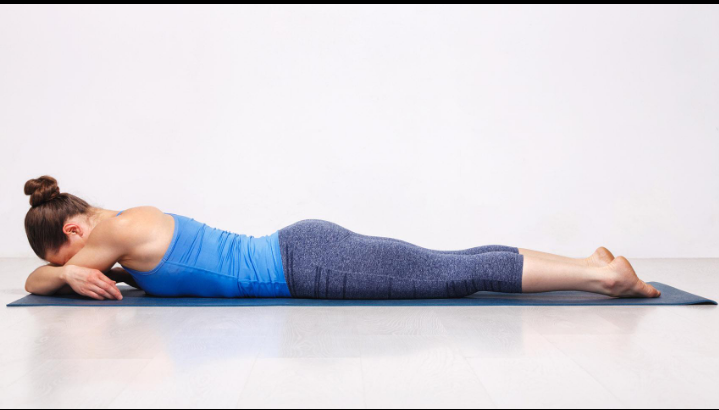
Makarasana, also known as Crocodile Pose, is a gentle and deeply relaxing yoga posture. The Sanskrit word Makara means “crocodile,” while Asana means “posture.” The body resembles a resting crocodile while practicing this pose.
It is primarily a prone relaxation posture and is often practiced between or after more demanding yoga asanas. The Ministry of AYUSH describes Makarasana as a posture that promotes whole-body relaxation and helps counter stress and anxiety.
How to Perform Makarasana
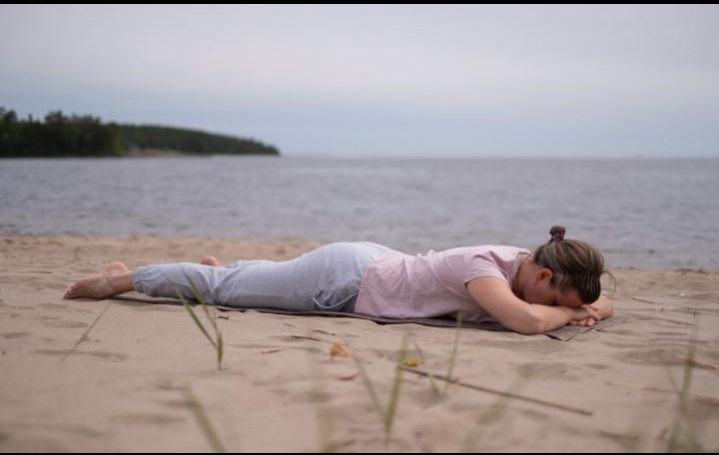
- Lie comfortably on your stomach on a yoga mat.
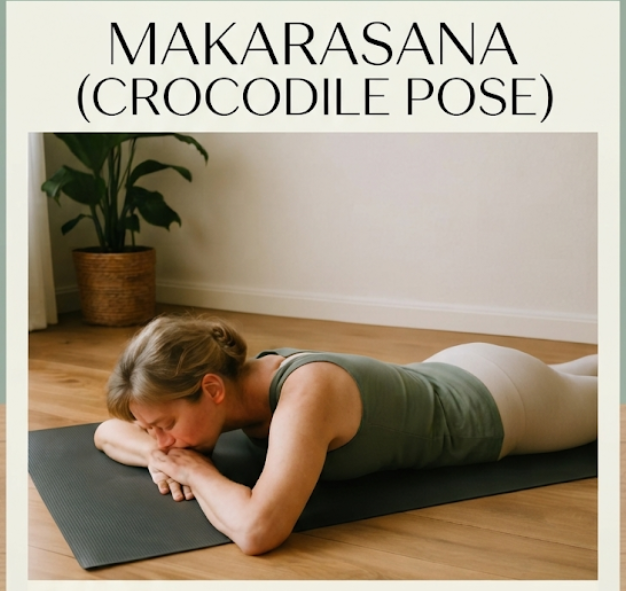
- Keep your legs comfortably apart and allow your toes to point outward.
- Bend both arms and place one palm over the other.
- Rest your forehead or the side of your head gently on your hands.
- Close your eyes and relax your shoulders, back, abdomen and legs.
- Breathe slowly and naturally.
- Remain in the posture for several comfortable breaths or a few minutes.
- To come out, slowly move your hands and gently turn onto your side before sitting up.
The official Common Yoga Protocol gives essentially this relaxed prone position, with the feet apart, toes outward, hands supporting the head and the whole body relaxed.
Benefits of Makarasana
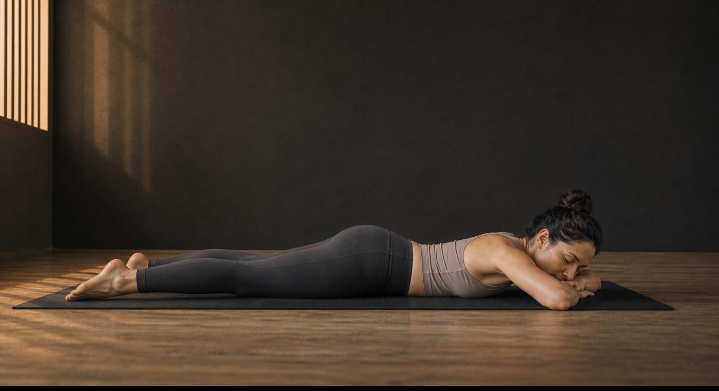
1. Promotes Deep Relaxation
Makarasana allows the body to rest and may help calm the nervous system.
2. Helps Relieve Stress and Anxiety
Slow, mindful breathing while resting in the pose can encourage relaxation and reduce feelings of tension.
3. Relaxes the Back
The comfortable prone position can help release muscular tension in the back and is often used as a resting posture during yoga practice.
4. Encourages Better Breath Awareness
Because the abdomen is supported by the floor, the movement of the breath can become easier to notice.
5. Useful Between Back-Bending Asanas
Makarasana can be used as a recovery posture between stronger prone back-strengthening exercises.
6. Supports Mental Calmness
Practicing the pose with slow breathing and closed eyes can create a peaceful, meditative experience.
Breathing in Makarasana
Breathe slowly, gently and naturally. Do not force deep breaths. Pay attention to the movement of the abdomen, ribs and back as you inhale and exhale.
Try to keep the face, jaw and shoulders relaxed throughout the practice.
Precautions
Although Makarasana is a gentle posture, it is not suitable for everyone.
- Avoid it during pregnancy, particularly when lying on the abdomen is uncomfortable or contraindicated.
- People with significant neck, shoulder or spinal problems should seek professional guidance.
- Avoid the pose if lying on the stomach causes pain or difficulty breathing.
- Take extra care after recent abdominal or spinal surgery.
- People with frozen shoulders should follow the precautions recommended by the Ministry of AYUSH.
Important: Yoga can complement healthy lifestyle practices, but it should not replace medical diagnosis or treatment.
Common Mistakes to Avoid
- Forcing the neck into an uncomfortable position.
- Keeping the legs unnecessarily tense.
- Holding the breath.
- Trying to achieve a particular shape instead of relaxing.
- Continuing the pose despite pain or breathing difficulty.
Frequently Asked Questions (FAQ)
1. What is Makarasana?
Makarasana is a restorative yoga posture performed while lying on the abdomen. It is commonly called Crocodile Pose.
2. Is Makarasana suitable for beginners?
Yes. It is generally considered a beginner-friendly relaxation posture when practiced comfortably and correctly.
3. How long can I stay in Makarasana?
Beginners can start with a few minutes and gradually increase the duration according to comfort. There is no need to hold the pose through pain or discomfort.
4. Can Makarasana help with back tension?
It may help relax the back and reduce muscular tension. However, persistent or severe back pain should be evaluated by a qualified healthcare professional.
5. Can I practice Makarasana after exercise?
Yes. It can be used as a recovery or relaxation posture, particularly after prone back-strengthening exercises.
6. Can Makarasana help reduce stress?
It can promote relaxation and may help counter stress and anxiety when combined with calm, mindful breathing.
7. Should I practice Makarasana during pregnancy?
Generally, abdominal-lying postures should be avoided during pregnancy unless specifically advised and appropriately modified by a qualified professional.
Conclusion
Makarasana is a simple yet valuable relaxation posture. By allowing the body to rest completely and encouraging slow, natural breathing, it can help release physical tension and promote mental calmness. Practice gently, listen to your body, and never force the posture.
“Relax your body, calm your breath, and give your mind a moment of peace.” 🧘♂️🐊