Introduction
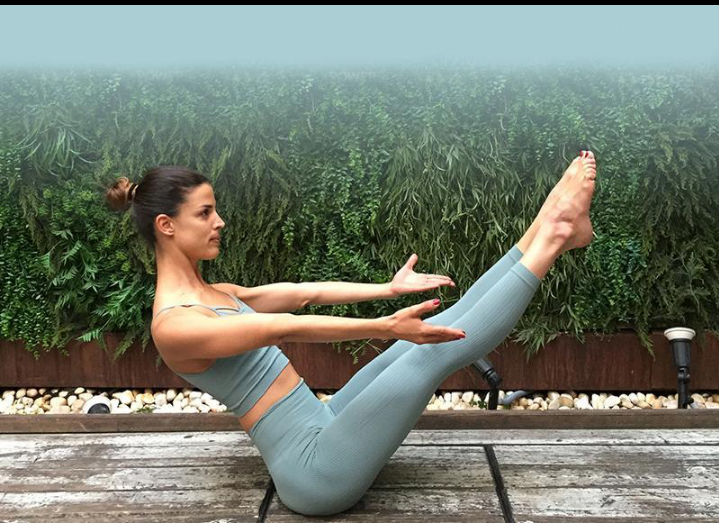
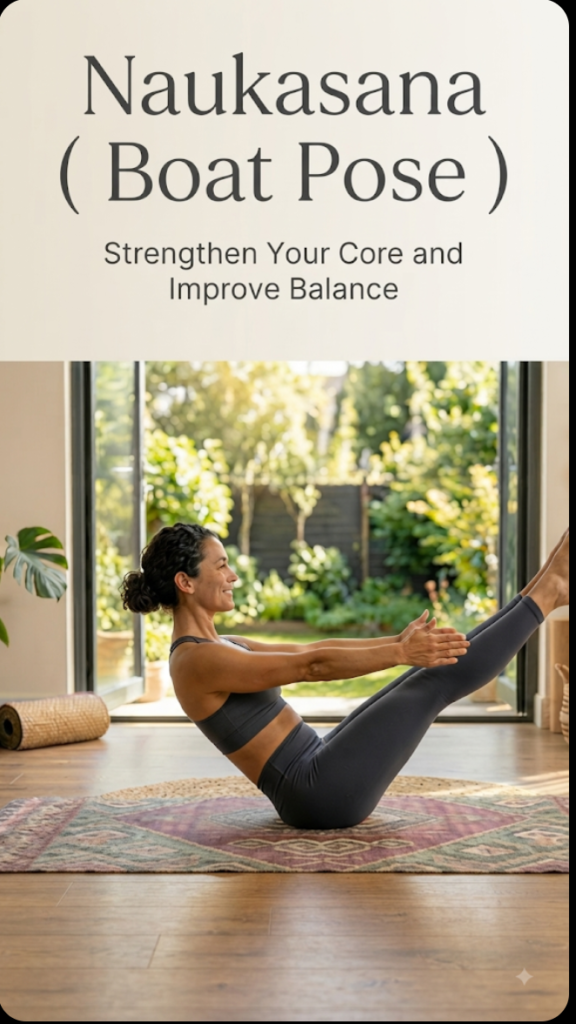
Naukasana (Boat Pose) is a yoga posture named after the Sanskrit words Nauka meaning “boat” and Asana meaning “posture.” In the prone variation, you lie on your stomach and lift your chest, arms and legs from the floor, creating a boat-like shape.
This variation primarily engages the back, gluteal, hamstring, shoulder and core muscles. It is different from the commonly taught supine Boat Pose, in which you balance on your sitting bones.
How to Perform Prone Naukasana
- Lie on your stomach on a comfortable yoga mat.
- Keep your legs straight and together or slightly apart for comfort.
- Extend your arms alongside your body, palms facing inward or upward.
- Keep your forehead gently on the mat and relax your shoulders.
- Take a slow, deep breath in.
- As you inhale, gently lift your head, chest, arms and both legs off the floor.
- Keep your neck long and avoid lifting your head excessively.
- Stretch through your arms and legs while keeping your movements controlled.
- Breathe normally and hold the position according to your comfort.
- Slowly lower your chest, arms and legs back to the mat and relax.
A key alignment point is to avoid excessive arching of the lower back. Lift the chest and legs in a balanced manner rather than forcing the legs very high.
Benefits of Prone Naukasana
1. Strengthens the Back
It activates the spinal extensor muscles and can help develop back strength.
2. Improves Core Stability
The abdominal and trunk muscles work to stabilize the body during the posture.
3. Strengthens the Glutes and Hamstrings
Lifting the legs engages the muscles of the hips and back of the thighs.
4. Supports Better Posture
Regular strengthening of the back and posterior chain may contribute to better postural control.
5. Opens the Chest and Shoulders
The lifted chest and extended arms encourage movement through the upper back and shoulders.
6. Develops Body Awareness
Maintaining the pose with controlled breathing requires concentration, coordination and awareness.
Yoga sources commonly describe Naukasana as a strengthening posture for the abdominal and back muscles, although the prone variation has a somewhat different muscular emphasis from the supine version.
Common Mistakes to Avoid
- Lifting the legs excessively high.
- Compressing or pinching the lower back.
- Holding the breath.
- Straining the neck.
- Bending the knees unnecessarily.
- Performing the movement quickly instead of with control.
Tip: Quality of movement is more important than how high you can lift your limbs.
Precautions
Practice gently and stop if you experience pain, particularly in the lower back, neck or shoulders. People with recent abdominal or spinal surgery, significant spinal problems, severe back pain, or other medical conditions should seek appropriate professional advice before practising challenging variations of Naukasana. General yoga guidance also recommends medical consultation when a health condition may affect safe practice.
Pregnancy is another situation in which this prone posture should generally be avoided unless specifically cleared and modified by a qualified professional.
Beginner Modification
If lifting all four limbs feels difficult, begin by lifting only the chest and arms, keeping the legs on the floor. Alternatively, practise lifting one leg at a time before progressing to both legs.
Frequently Asked Questions (FAQ)
1. What is Prone Naukasana?
Prone Naukasana is the face-down variation of Boat Pose in which the practitioner lifts the chest, arms and legs from the floor to create a boat-like shape.
2. Is Prone Naukasana the same as Navasana?
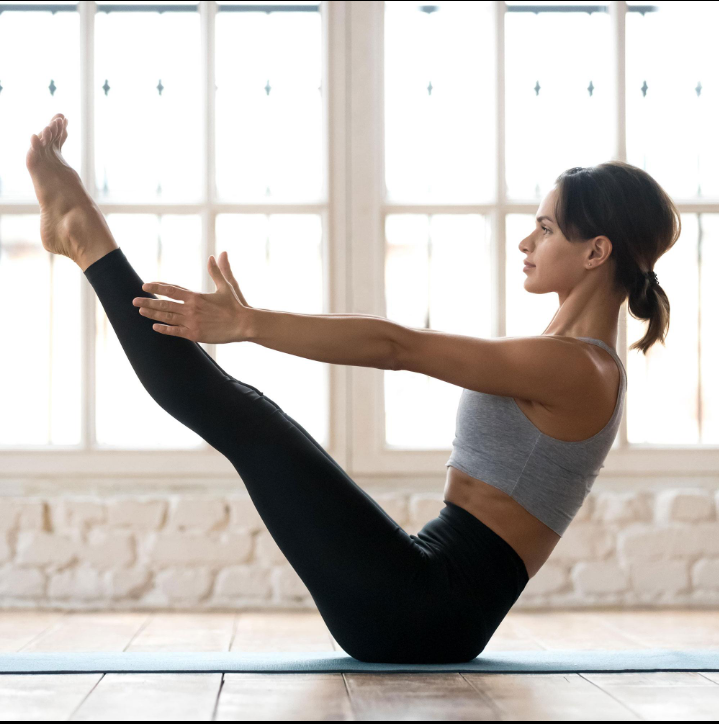
No. Navasana (Full Boat Pose) is generally performed lying or balancing from a seated/supine-entry position with the torso and legs forming a V-shape. Prone Naukasana is performed face down and emphasizes the posterior chain.
3. Which muscles does Prone Naukasana work?
It mainly engages the back extensors, gluteal muscles, hamstrings, shoulders and trunk-stabilizing muscles.
4. How long should I hold Prone Naukasana?
Beginners can start with a short, comfortable hold of around 10–20 seconds and gradually increase as strength and technique improve. Do not hold the posture if your breathing becomes strained.
5. Can Naukasana reduce belly fat?
Naukasana can strengthen and tone muscles, but no single yoga posture can selectively burn belly fat. Fat loss generally depends on overall physical activity, nutrition, sleep and energy balance.
6. Can beginners practise this pose?
Yes, beginners can start with a modified version and gradually progress. Proper alignment is more important than achieving a high lift.
7. When is the best time to practise Naukasana?
Many yoga traditions recommend practising asanas when the stomach is relatively empty, often in the morning. Choose a time when you feel comfortable and can practise without rushing.
8. Should I feel pain while doing Prone Naukasana?
No. Mild muscular effort is expected, but sharp, pinching or persistent pain is a reason to stop and reassess your technique.
Conclusion
Naukasana – Prone Variation is a useful strengthening posture that can challenge the back, glutes, hamstrings, shoulders and core while improving body awareness and postural control. Start gently, maintain steady breathing and avoid forcing the range of movement. With regular, mindful practice, this boat-like posture can become a valuable part of a balanced yoga routine.
Yoga should complement—not replace—appropriate medical care. If you have an injury or medical condition, seek professional guidance before beginning a new yoga practice.