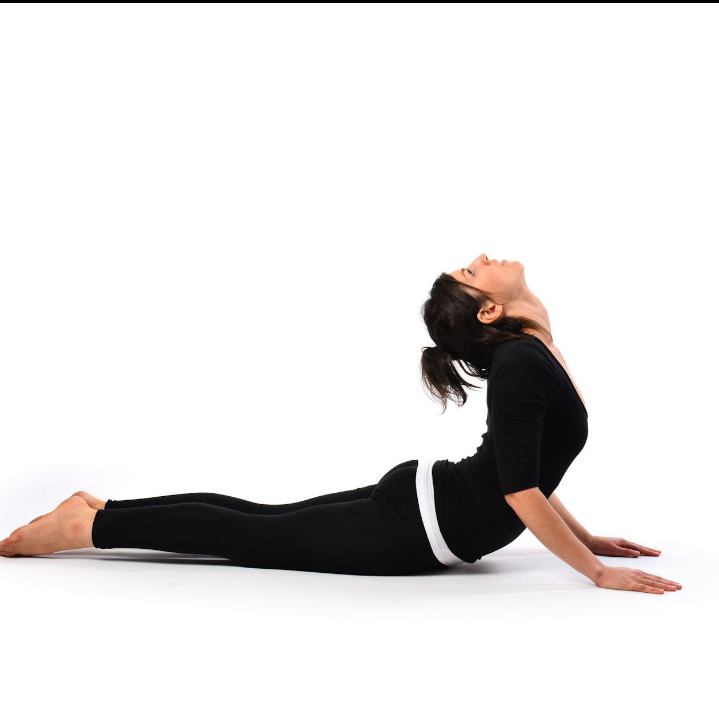
Introduction
Prone asanas are yoga postures performed while lying on the stomach. These poses strengthen the back muscles, improve spinal flexibility, open the chest, and stimulate the abdominal organs. They are excellent for improving posture, relieving mild back stiffness, and increasing overall body strength.
Practicing prone asanas regularly can help counter the effects of prolonged sitting and promote better physical and mental well-being.
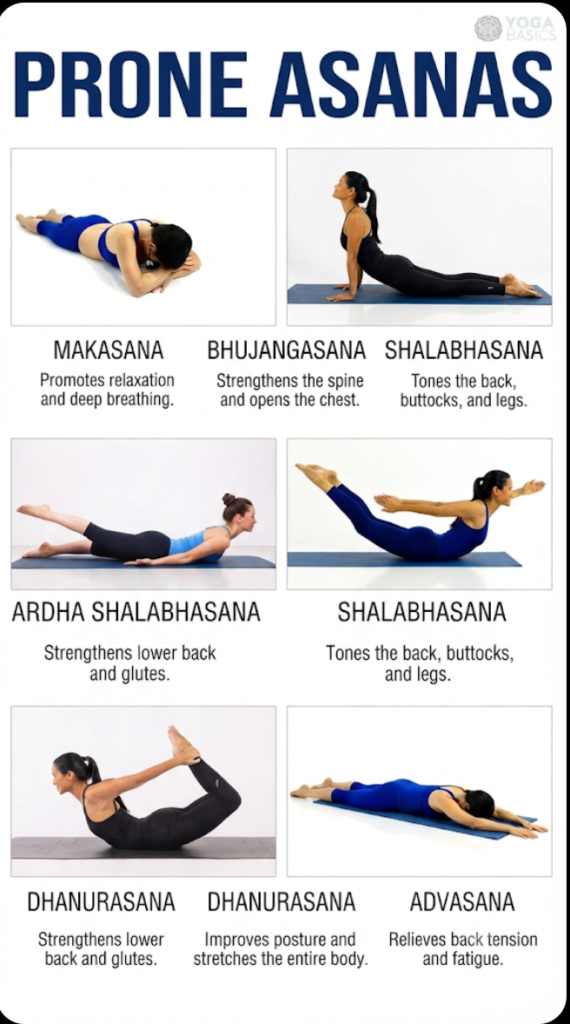
Benefits of Prone Asanas
- Strengthen the back, shoulders, and legs.
- Improve spinal flexibility.
- Enhance posture and body alignment.
- Massage and stimulate abdominal organs.
- Improve digestion and metabolism.
- Open the chest and improve breathing capacity.
- Reduce stress and fatigue.
- Increase balance and body awareness.
Popular Prone Asanas
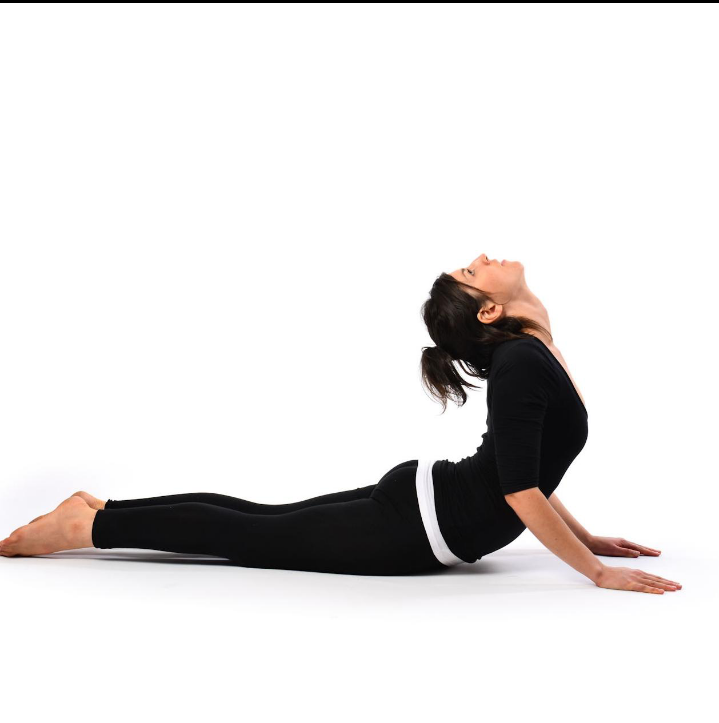
1. Bhujangasana (Cobra Pose)
Benefits:
- Strengthens the spine.
- Opens the chest and lungs.
- Improves posture.
- Helps reduce mild lower back stiffness.
2. Shalabhasana (Locust Pose)
Benefits:
- Strengthens the lower back.
- Tones the hips and thighs.
- Improves endurance.
- Supports better posture.
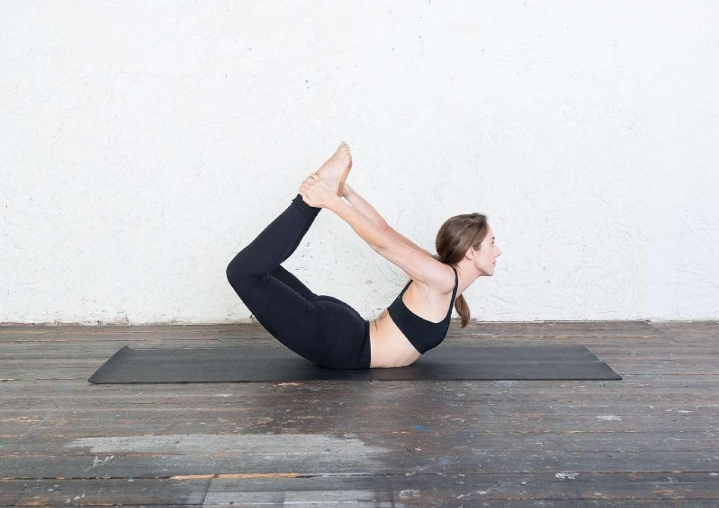
3. Dhanurasana (Bow Pose)
Benefits:
- Provides a deep stretch to the entire front body.
- Improves spinal flexibility.
- Stimulates digestion.
- Strengthens the back muscles.
4. Makarasana (Crocodile Pose)
Benefits:
- Relaxes the body.
- Relieves stress.
- Helps reduce fatigue.
- Promotes deep breathing.
5. Ardha Shalabhasana (Half Locust Pose)
Benefits:
- Strengthens the lower back.
- Improves leg muscle strength.
- Suitable for beginners.
How to Practice Prone Asanas Safely
- Practice on a yoga mat.
- Warm up before beginning.
- Move slowly and breathe normally.
- Avoid forcing your body into any posture.
- Hold each pose for 15–30 seconds initially.
- Relax in Makarasana between difficult poses.
- End your practice with a relaxation pose.
Precautions
- Avoid these poses during pregnancy unless advised by a qualified instructor.
- People with severe back injuries should consult a healthcare professional before practicing.
- Stop immediately if you experience sharp pain.
- Practice on an empty stomach or at least 3 hours after a meal.
- Beginners should learn under proper guidance.
Who Can Practice Prone Asanas?
- Beginners
- Office workers
- Students
- Athletes
- Yoga enthusiasts
- People looking to improve posture and flexibility
Frequently Asked Questions (FAQs)
1. What are prone asanas?
Prone asanas are yoga poses performed while lying on the stomach.
2. Which prone asana is best for beginners?
Makarasana and Ardha Shalabhasana are ideal for beginners.
3. Can prone asanas help with back pain?
Yes, gentle prone asanas can strengthen back muscles and improve posture. However, people with severe back problems should seek medical advice first.
4. How long should I hold each pose?
Beginners can hold each posture for 15–30 seconds and gradually increase the duration.
5. Should I practice prone asanas every day?
Yes, daily practice is beneficial when done correctly and within your comfort level.
6. What is the best time to practice?
Early morning or evening on an empty stomach is ideal.
7. Can prone asanas improve digestion?
Yes. Many prone poses gently massage the abdominal organs, which may support healthy digestion.
8. Which pose is the most relaxing among prone asanas?
Makarasana (Crocodile Pose) is one of the most relaxing prone yoga postures.
Conclusion
Prone asanas are an excellent addition to any yoga routine. They help strengthen the back, improve flexibility, enhance posture, and support overall health. Whether you are a beginner or an experienced practitioner, including poses such as Bhujangasana, Shalabhasana, Dhanurasana, and Makarasana can improve your physical fitness and promote relaxation. Practice regularly with proper technique and enjoy the long-term benefits of these powerful yoga postures.