Introduction
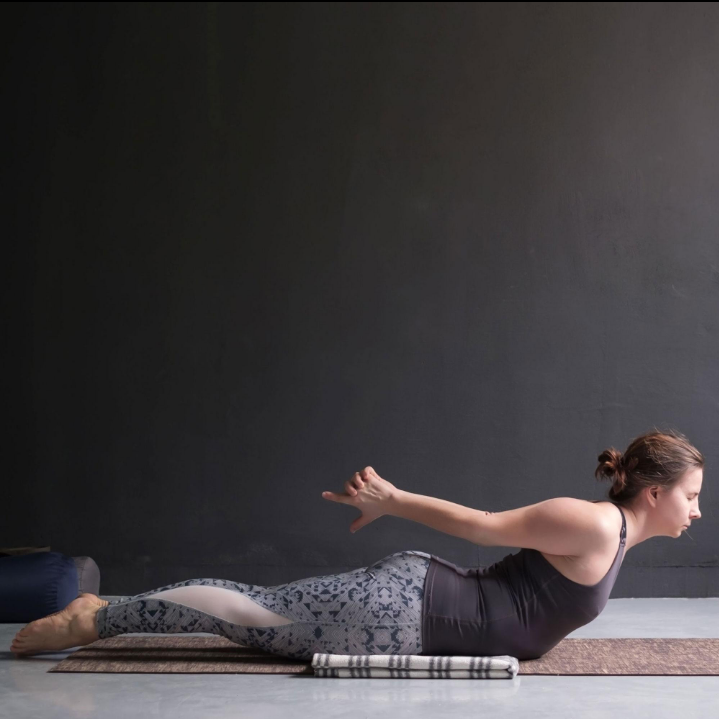
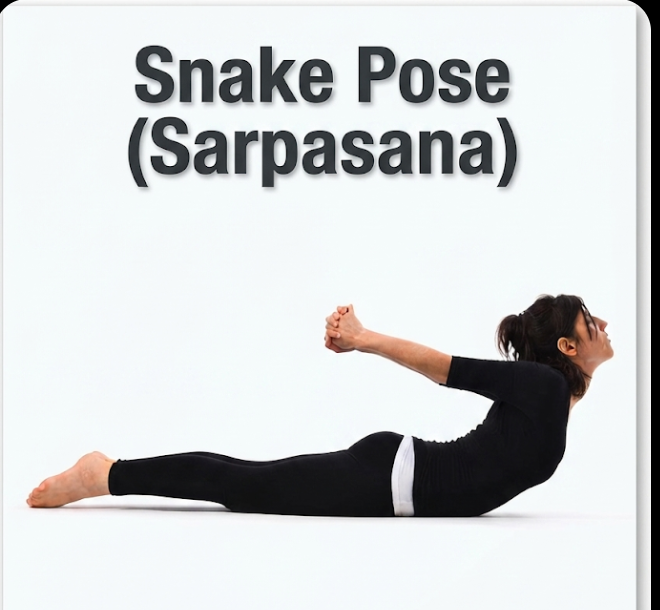
Sarpasana, also known as Snake Pose, is a prone back-bending yoga posture. The Sanskrit word Sarpa means “snake” and Asana means “pose.” The posture resembles the raised upper body of a snake and focuses on strengthening the back while opening the chest and shoulders.
How to Perform Sarpasana
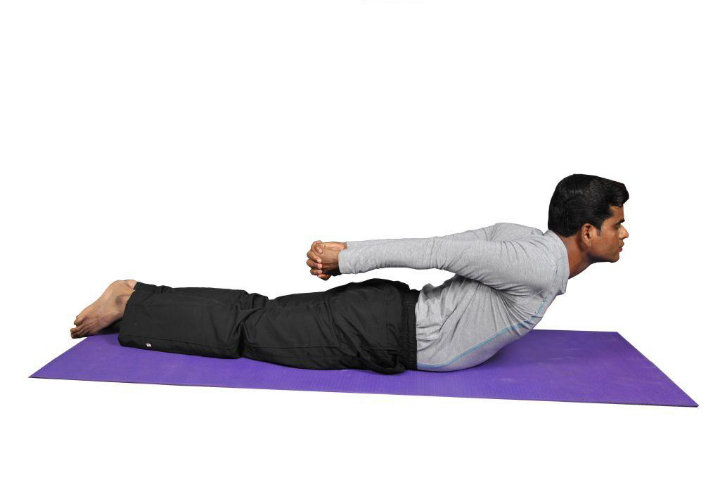
- Lie on your stomach on a yoga mat with your legs straight and feet together.
- Place your chin gently on the floor.
- Interlock your fingers and place your hands behind your back, around the buttock area.
- Take a slow, deep breath and gently lift your head and chest from the floor.
- At the same time, extend your interlocked arms backward and upward as comfortably as possible.
- Bring your shoulder blades gently toward each other and keep your legs active.
- Maintain the position while breathing comfortably. Do not force the backbend.
- Slowly lower your chest and arms and relax.
- Beginners should start with a short hold and gradually build up with proper guidance.
Benefits of Sarpasana
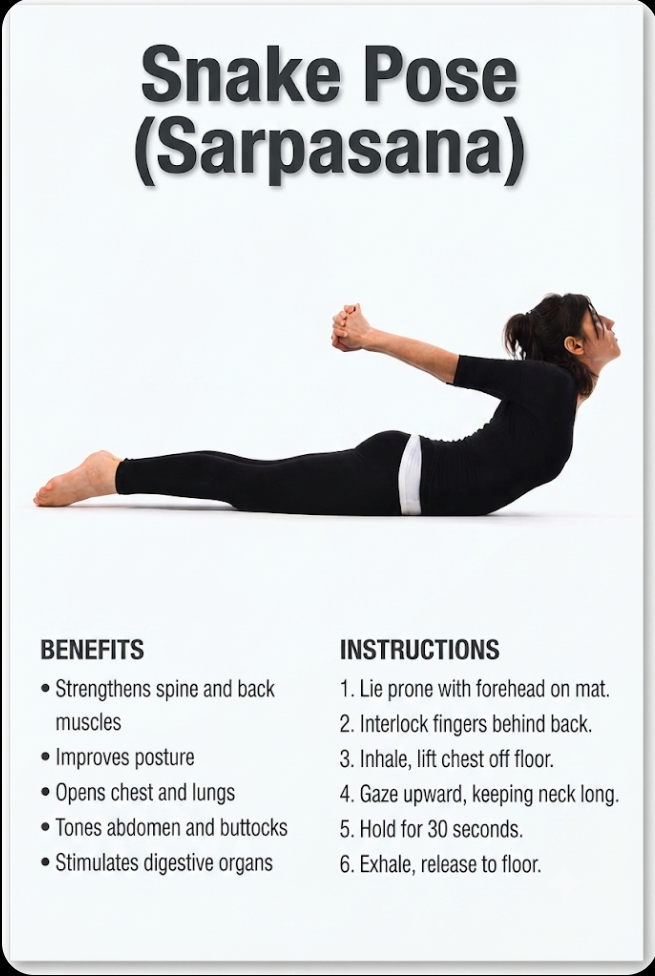
Regular, appropriate practice may:
- Strengthen the back and spinal muscles.
- Open and stretch the chest and shoulders.
- Help improve posture and rounded shoulders.
- Promote spinal flexibility.
- Stretch the abdominal region and front of the body.
- Encourage deeper, controlled breathing.
- Improve body awareness and help relieve muscular tension.
Note: Yoga can support general fitness and flexibility, but it should not be considered a treatment or cure for a medical condition.
Sarpasana vs. Bhujangasana
Although both are backbending poses, they are performed differently. In Sarpasana, the hands are generally interlocked behind the back and the arms are lifted backward, so the back muscles play a major role. Bhujangasana (Cobra Pose) normally uses the hands on the floor to support the upper body.
Precautions and Contraindications
Sarpasana can place significant demands on the back, neck, shoulders and abdomen. Avoid it or seek professional medical/yoga guidance if you have:
- A recent back, neck, shoulder or abdominal injury.
- Recent abdominal or spinal surgery.
- Hernia or peptic ulcer.
- Certain spinal or disc problems.
- Pregnancy.
- Heart disease or uncontrolled/high blood pressure.
Do not force the spine into a deeper bend. Stop immediately if you experience sharp pain, dizziness, unusual breathlessness or numbness.
Best Time to Practise
Sarpasana is generally best practised when the stomach is relatively empty, preferably after a suitable warm-up. Gentle preparatory movements and easier backbends can help prepare the body.
Frequently Asked Questions (FAQ)
1. What is Sarpasana?
Sarpasana is a yoga backbend also called Snake Pose. It is performed lying on the stomach while lifting the chest and extending the arms backward.
2. What are the main benefits of Sarpasana?
It may help strengthen the back, open the chest and shoulders, improve posture and increase spinal flexibility.
3. Is Sarpasana the same as Bhujangasana?
No. They are similar backbends, but their arm and hand positions differ. Sarpasana generally involves interlocking the hands behind the back, whereas Bhujangasana uses the hands on the floor.
4. How long should beginners hold Sarpasana?
Beginners should hold it only for a comfortable, short duration and gradually increase the time as strength and flexibility improve. Never hold the pose through pain or strain.
5. Can Sarpasana improve posture?
It may help improve posture by strengthening the back muscles and opening the chest and shoulders.
6. Who should avoid Sarpasana?
People with certain back or disc problems, hernia, peptic ulcer, pregnancy, recent surgery, or significant heart/blood-pressure problems should avoid it or practise only after appropriate professional advice.
7. Can Sarpasana be practised every day?
For healthy individuals, it may be incorporated into a regular yoga routine, provided it is performed correctly and without pain. A qualified yoga instructor can help determine appropriate frequency and technique.
Conclusion
Sarpasana (Snake Pose) is a useful back-bending posture that can strengthen the back, open the chest and shoulders, and support better posture and flexibility. Practise it slowly, maintain comfortable breathing, and avoid forcing the spine. Consistency, correct technique and awareness are more important than going deeper into the pose.
🧘♀️ Practise mindfully, breathe naturally, and respect your body’s limits.