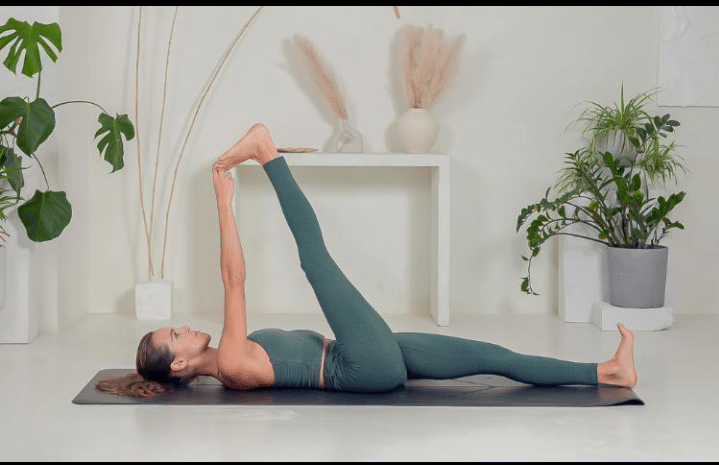
A Gentle Yoga Pose for Hamstring Flexibility, Hip Mobility & Relaxation
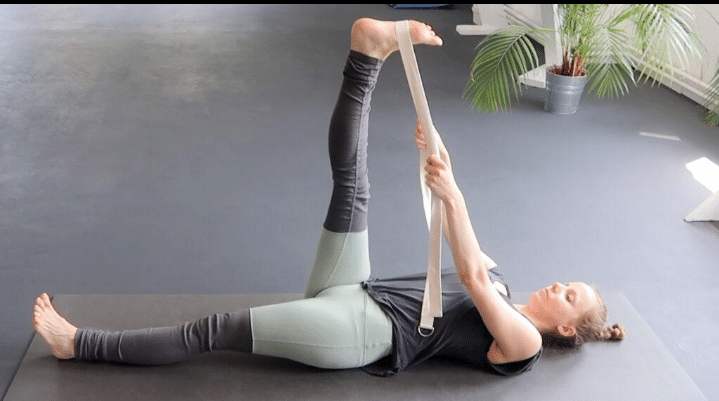
Supta Padangusthasana is a reclining yoga posture performed while lying on the back. The Sanskrit name comes from Supta (reclining), Pada (foot), Angustha (big toe), and Asana (pose). It is commonly known as Reclining Hand-to-Big-Toe Pose.
This pose provides a controlled stretch to the back of the leg, particularly the hamstrings, while keeping the body supported by the floor. It can also help improve flexibility around the hips and legs.
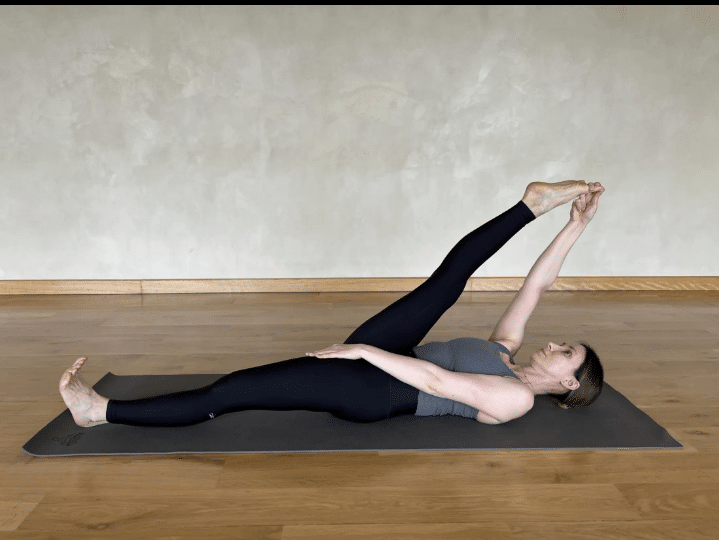
Reclining Hand to – Big toe Pose
🌿 How to Perform Supta Padangusthasana
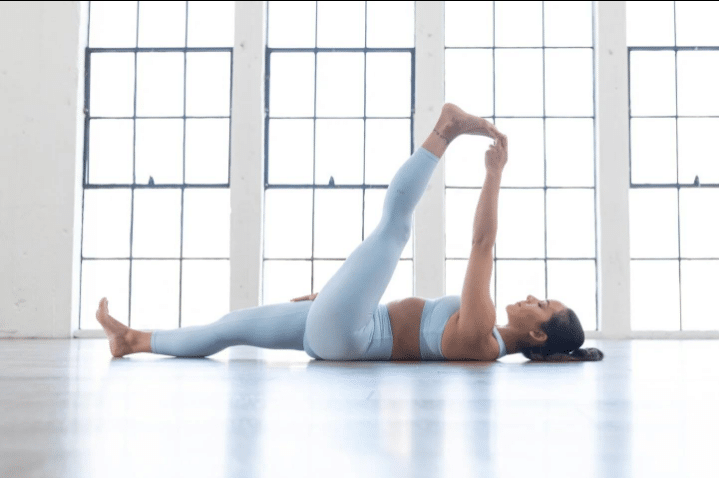
Step 1: Starting Position
Lie comfortably on your back on a yoga mat. Keep both legs extended and your feet flexed.
Step 2: Bring One Knee Up
Bend your right knee and gently bring it toward your chest while keeping the left leg extended on the floor.
Step 3: Hold the Foot
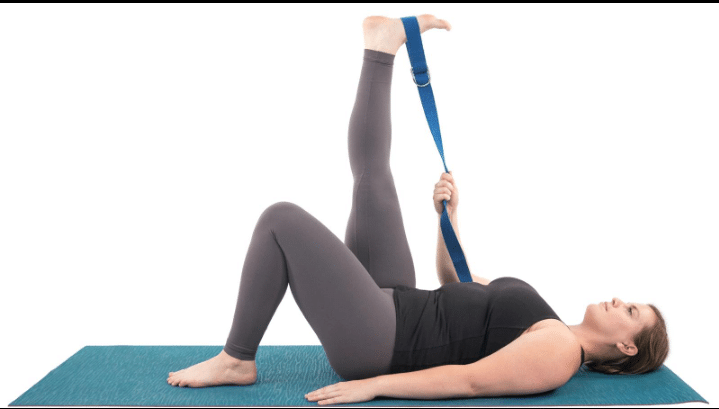
If your flexibility allows, hold the right big toe with the first two fingers and thumb. Alternatively, use a yoga strap around the sole of the foot, which is often easier for beginners.
Step 4: Extend the Leg
Slowly straighten your right leg toward the ceiling. Do not force the knee straight if your hamstrings feel tight.
Step 5: Maintain Alignment
Keep your shoulders, head and hips relaxed on the floor. Keep the extended left leg active and grounded.
Step 6: Breathe
Take slow, comfortable breaths and hold the position for several breaths. You should feel a gentle stretch, not pain.
Step 7: Release
Bend the raised knee, gently bring it toward your chest, release the foot and return both legs to the floor.
Repeat on the opposite side.
💚 Benefits of Supta Padangusthasana
Regular and appropriate practice may:
- Stretch and improve flexibility of the hamstrings.
- Stretch the calves, hips and inner thighs.
- Encourage greater hip mobility.
- Help maintain flexibility in the back of the legs.
- Engage the abdominal muscles when performed with proper alignment.
- Provide a calming, supported stretch because the back remains on the floor.
🧘 Beginner’s Tip
Don’t worry if you cannot reach your big toe. A yoga strap is an excellent modification and allows you to maintain better alignment without pulling aggressively on the leg.
⚠️ Precautions
- Never force the leg into a deeper stretch.
- Stop if you experience sharp pain.
- People with a recent hamstring, hip, knee or lower-back injury should seek appropriate professional guidance before practising.
- If you have had recent surgery, fractures or another significant medical condition, consult your healthcare professional before starting yoga.
- Beginners should learn the pose under the guidance of a qualified yoga instructor when possible.
❓ Frequently Asked Questions (FAQ)
1. Is Supta Padangusthasana suitable for beginners?
Yes. It can be adapted for beginners, particularly by using a yoga strap instead of trying to hold the big toe directly.
2. What does Supta Padangusthasana stretch?
It primarily stretches the hamstrings, while also involving the calves, hips and inner thighs.
3. How long should I hold the pose?
Beginners can start with several comfortable breaths on each side. Gradually increase the duration as flexibility improves.
4. Can I practise it without touching my big toe?
Absolutely. Use a yoga strap around the foot. Flexibility should develop gradually; touching the toe is not the goal.
5. Should my raised leg be completely straight?
Only straighten it as much as is comfortable. A slight bend in the knee is preferable to forcing the leg straight.
6. Can Supta Padangusthasana help improve flexibility?
Yes. Regular, gentle practice can help improve flexibility in the hamstrings and surrounding areas.
7. Should I feel pain while doing this pose?
No. You should feel a manageable stretch, not sharp or intense pain. If pain occurs, come out of the pose.
🌸 Conclusion
Supta Padangusthasana is a simple yet effective reclining yoga pose that gently works on flexibility in the legs and hips. With regular practice, proper breathing and appropriate modifications, it can become a valuable part of a balanced yoga routine.
Remember: Yoga is not about forcing the body—it is about moving with awareness, patience and respect for your body’s limits. 🧘♀️🌿