⭐INTRODUCTION
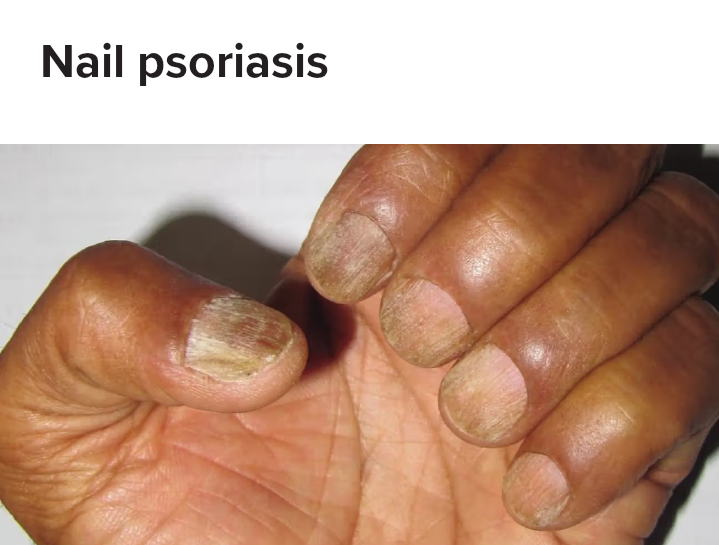
Nail Psoriasis is a chronic condition that affects the fingernails and toenails of people who have psoriasis. It occurs when psoriasis involves the nail matrix (where the nail is formed) or the nail bed (skin under the nail). Nail psoriasis can affect daily activities, appearance, and quality of life, especially when it becomes painful or severe.
⭐What Is Nail Psoriasis?
Nail psoriasis is an autoimmune condition in which the immune system speeds up skin cell production around the nails. This leads to visible changes in nail color, texture, and shape. It is not contagious and can appear with or without skin psoriasis.
⭐Common Symptoms of Nail Psoriasis
Symptoms may vary from person to person, but common signs include:
- Pitting – small dents or pits on the nail surface
- Discoloration – yellow-brown or white patches
- Onycholysis – separation of the nail from the nail bed
- Thickened nails – nails become hard and difficult to cut
- Crumbling nails – nails may become weak and break easily
- Redness under the nail – due to inflammation
NOTE:-
Toenails are often more severely affected than fingernails.
⭐Causes and Risk Factors
The exact cause of nail psoriasis is not fully known, but it is linked to:
- Autoimmune dysfunction
- Family history of psoriasis
- Existing skin or scalp psoriasis
- Psoriatic arthritis
- Stress, infections, or nail injury
⭐Diagnosis
Doctors usually diagnose nail psoriasis by:
- Physical examination of nails
- Reviewing personal and family medical history
- Sometimes a nail biopsy to rule out fungal infection
⭐Treatment Options
There is no permanent cure, but treatments help control symptoms:
Topical Treatments
- Corticosteroid creams or ointments
- Vitamin D analogues
- Nail lacquers with medication
Systemic Treatments
- Oral medicines for severe cases
- Biologic drugs in advanced psoriasis
Other Therapies
- Steroid injections into the nail area
- Phototherapy (light therapy)
NOTE :-
Treatment results are slow because nails grow gradually.
⭐Nail Care Tips
- Keep nails short and clean
- Avoid nail trauma and harsh chemicals
- Wear gloves during household work
- Moisturize nails and cuticles regularly
💐Frequently Asked Questions (FAQ)
Q1. Is nail psoriasis contagious?
No, nail psoriasis is not contagious and cannot spread from person to person.
Q2. Can nail psoriasis occur without skin psoriasis?
Yes, some people have nail psoriasis without visible skin symptoms.
Q3. How long does nail psoriasis take to improve?
Improvement may take several months, as fingernails grow slowly and toenails even slower.
Q4. Is nail psoriasis the same as fungal infection?
No, but they can look similar. Proper diagnosis is important because treatments are different.
Q5. Can nail psoriasis cause permanent damage?
In severe or untreated cases, it may lead to long-term nail deformity.
Q6. Does diet affect nail psoriasis?
A healthy diet, stress control, and avoiding triggers may help manage symptoms.
🌺Conclusion
Nail psoriasis is a common yet often overlooked form of psoriasis that can significantly affect daily life and self-confidence. Early diagnosis, proper treatment, and good nail care can greatly reduce symptoms and prevent complications. Although it is a long-term condition, consistent medical care and lifestyle adjustments can help people live comfortably with nail psoriasis.