⭐Introduction
Pityriasis Rosea is a common, self-limiting skin condition that mainly affects teenagers and young adults. It usually begins with a single large patch followed by smaller rashes over the body. Although it may look alarming, it is generally harmless and resolves on its own within a few weeks.
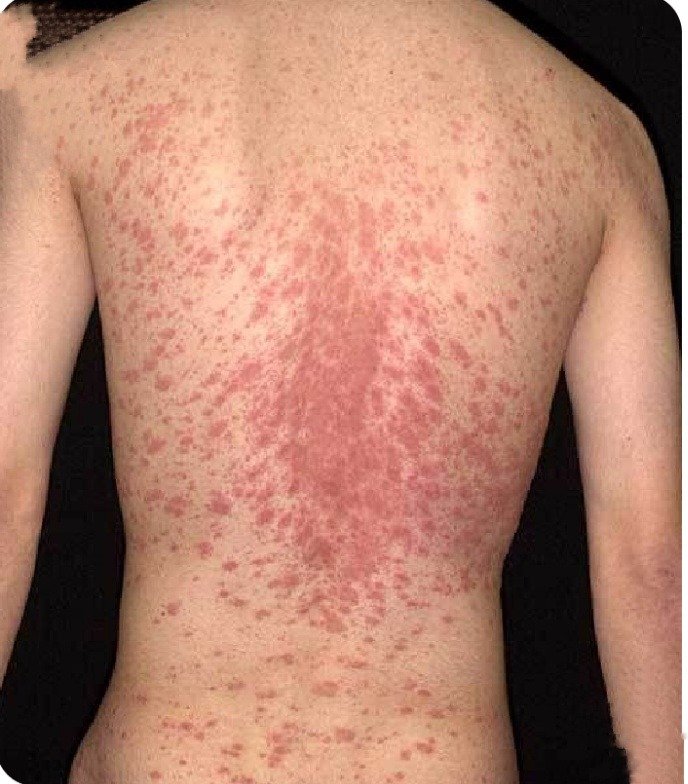
PITYRIASIS ROSEA
🌺What Is Pityriasis Rosea?
Pityriasis Rosea is an inflammatory skin rash characterized by oval-shaped, pink or reddish patches with fine scaling. The condition is not contagious and often appears suddenly.
💐Causes of Pityriasis Rosea
The exact cause is unknown, but it is believed to be linked to:
- Viral infections (especially human herpesvirus 6 or 7)
- Weakened immunity
- Seasonal changes
- Stress or fatigue
NOTE :-
It is not caused by allergy, food, or poor hygiene.
👍Signs and Symptoms
- A herald patch (single large oval patch) appears first
- Multiple smaller patches develop after 1–2 weeks
- Rash follows a “Christmas tree” pattern on the back
- Mild to moderate itching
- Dry, scaly skin
- Mild fever, headache, or fatigue (rare)
⭐Who Is at Risk?
- Teenagers and young adults (10–35 years)
- People with recent viral illness
- More common in spring and autumn
- Slightly more common in women
⭐Diagnosis
Pityriasis Rosea is usually diagnosed through:
- Physical examination
- Medical history
In rare cases, tests may be done to rule out fungal infections or psoriasis.
🌺Treatment Options
Since the condition is self-limiting, treatment focuses on symptom relief:
- Moisturizers to reduce dryness
- Antihistamines for itching
- Mild topical corticosteroids if itching is severe
- Lukewarm baths instead of hot water
- Avoid harsh soaps and tight clothing
Most cases clear within 6–8 weeks without treatment.
⭐Home Care Tips
- Keep skin well moisturized
- Avoid excessive sweating
- Wear loose, cotton clothing
- Protect skin from excessive sun exposure
- Avoid scratching to prevent irritation
⭐FAQs (Frequently Asked Questions)
1. Is Pityriasis Rosea contagious?
No, it does not spread from person to person.
2. How long does Pityriasis Rosea last?
Usually 6–8 weeks, sometimes up to 12 weeks.
3. Can it recur?
Recurrence is rare but possible.
4. Is Pityriasis Rosea dangerous?
No, it is generally harmless and self-resolving.
5. Can pregnant women get Pityriasis Rosea?
Yes, but early pregnancy cases should consult a doctor for monitoring.
6. Does diet affect Pityriasis Rosea?
There is no direct link, but a healthy diet supports recovery.
⭐Conclusion
Pityriasis Rosea is a benign and temporary skin condition that often resolves without medical intervention. Although its appearance can cause concern, understanding its harmless nature can reduce anxiety. With proper skin care and simple treatments to relieve itching, most individuals recover fully without complications.