⭐INTRODUCTION
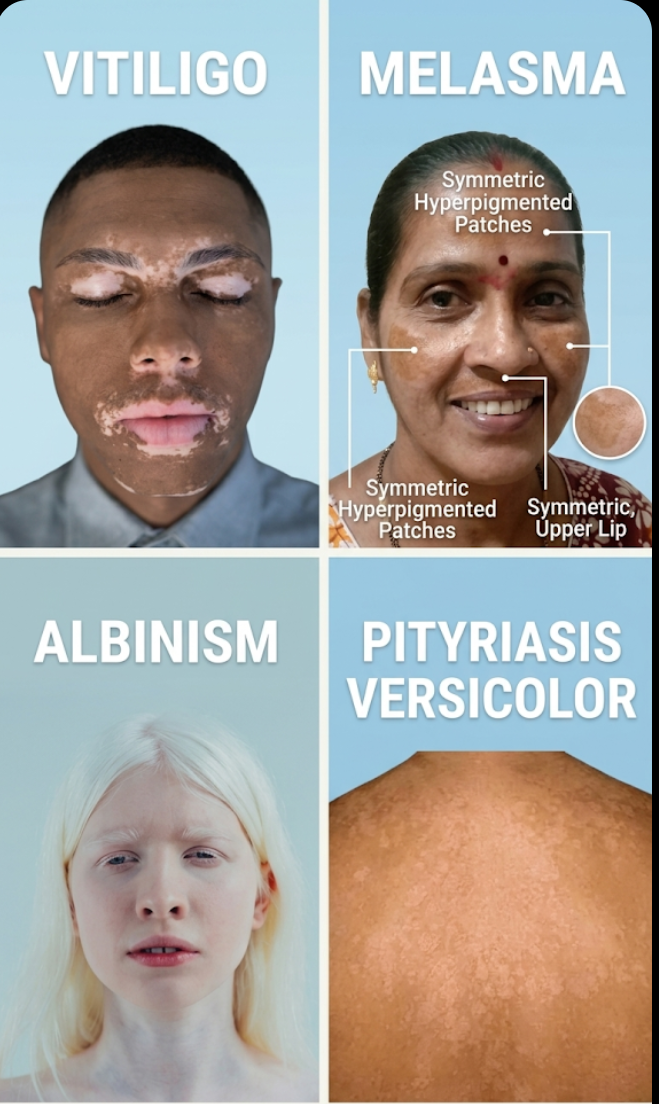
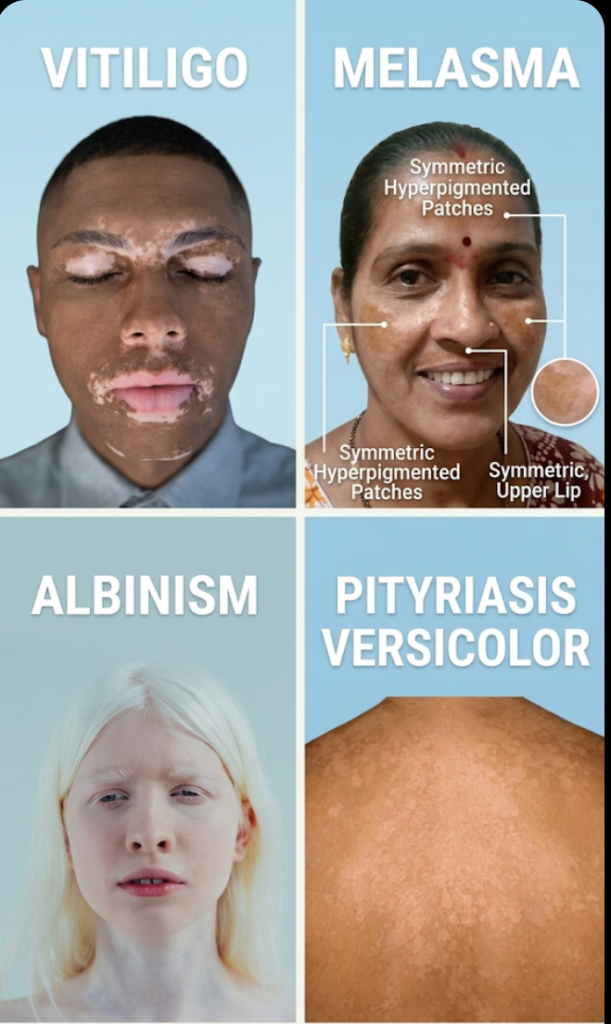
Pigmentary disorders are conditions that affect the color of the skin. The color of human skin mainly depends on a pigment called melanin, which is produced by special cells known as melanocytes. When the production of melanin increases, decreases, or becomes uneven, it leads to pigmentary disorders.
These conditions can affect people of any age, gender, or skin type. Some pigmentary disorders are temporary, while others may be long-lasting. They are usually not dangerous but can affect a person’s appearance and confidence.
PIGMENTORY DISEASE
⭐Causes of Pigmentary Disorders
Several factors can lead to pigmentary disorders, such as:
- Genetic factors – Some conditions run in families.
- Sun exposure – Excess sunlight can increase melanin production.
- Hormonal changes – Pregnancy or hormonal imbalance may trigger pigmentation.
- Skin inflammation or injury – Burns, acne, or infections may cause pigmentation.
- Certain medications – Some drugs can affect skin color.
- Autoimmune conditions – The immune system may attack melanocytes.
⭐Types of Pigmentary Disorders
Some common pigmentary disorders include:
1. Hyperpigmentation
This occurs when the skin becomes darker than normal due to excess melanin. Examples include melasma, sunspots, and post-inflammatory pigmentation.
2. Hypopigmentation
In this condition, the skin becomes lighter because of reduced melanin production.
3. Depigmentation
This involves complete loss of pigment in certain areas of the skin.
4. Albinism
A rare genetic condition where the body produces little or no melanin.
⭐Symptoms
Common symptoms of pigmentary disorders include:
- Dark patches on the skin
- Light or white patches
- Uneven skin tone
- Spots appearing after sun exposure
- Changes in skin color over time
⭐Treatment and Management
Treatment depends on the type and cause of the disorder. Some common management methods include:
- Sun protection using sunscreen and protective clothing
- Topical creams prescribed by dermatologists
- Chemical peels or laser therapy
- Medications to control underlying causes
- Healthy skincare routine
NOTE :-
Early diagnosis and proper treatment can help manage many pigmentary disorders effectively.
🌹FAQ (Frequently Asked Questions)
1. Are pigmentary disorders dangerous?
Most pigmentary disorders are not dangerous. However, medical consultation is recommended to rule out serious skin conditions.
2. Can pigmentary disorders be cured?
Some pigmentary disorders can be treated successfully, while others can only be managed.
3. Does sunlight worsen pigmentation?
Yes, excessive sun exposure can increase pigmentation in many conditions.
4. Who is more likely to develop pigmentary disorders?
Anyone can develop them, but people with hormonal changes, genetic factors, or frequent sun exposure may have higher risk.
5. Can home remedies cure pigmentation?
Home remedies may help slightly, but proper medical treatment from a dermatologist is usually more effective.
🌺Conclusion
Pigmentary disorders are common skin conditions that affect the color and appearance of the skin. They occur due to changes in melanin production and can be caused by genetics, sun exposure, hormonal changes, or skin injury. Although most pigmentary disorders are not harmful, they can affect a person’s confidence and quality of life. Proper skincare, sun protection, and medical guidance can help manage these conditions effectively and maintain healthy skin.