📌 What is Glossitis?
Glossitis is a condition where the tongue becomes inflamed, red, swollen, and smooth. Normally, the tongue has small bumps called papillae, but in glossitis, these may disappear, giving the tongue a shiny or glossy appearance.
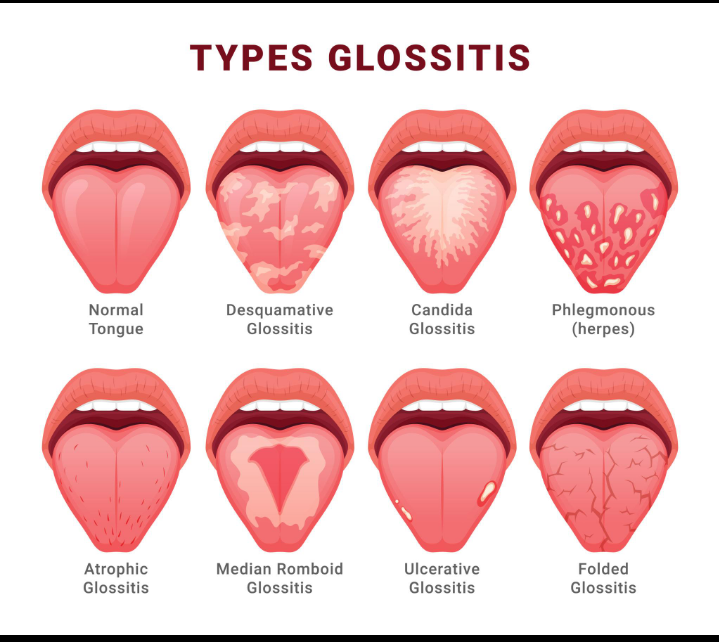
🔍 Types of Glossitis
- Acute Glossitis
Appears suddenly, often due to an allergic reaction or infection. - Chronic Glossitis
Develops over time, usually linked to underlying health conditions. - Atrophic Glossitis
Also known as “bald tongue,” where papillae are lost, making the tongue smooth and red.
⚠️ Causes of Glossitis
Glossitis can occur due to several reasons:
- Nutritional deficiencies
Lack of vitamin B12, iron, or folic acid - Infections
Bacterial, viral, or fungal (like oral thrush) - Allergic reactions
To foods, medications, or dental products - Irritation or trauma
Burns, sharp teeth, or dental appliances - Medical conditions
Anemia, diabetes, or autoimmune disorders - Dry mouth (xerostomia)
🧾 Symptoms of Glossitis
- Red or inflamed tongue
- Smooth, glossy surface
- Swelling of the tongue
- Pain or burning sensation
- Difficulty chewing, swallowing, or speaking
- Loss of taste (in some cases)
🧪 Diagnosis
Doctors usually diagnose glossitis through:
- Physical examination of the tongue
- Blood tests (to detect deficiencies or infections)
- Medical history review
💊 Treatment Options
Treatment depends on the underlying cause:
- Nutritional supplements
Vitamin B12, iron, or folic acid - Medications
Antibiotics or antifungal drugs if infection is present - Good oral hygiene
Brushing, tongue cleaning, and mouthwash - Avoid irritants
Spicy foods, alcohol, and tobacco - Hydration
Drink plenty of water to prevent dryness
🏡 Home Care Tips
- Maintain proper oral hygiene
- Eat a balanced diet rich in vitamins
- Avoid hot and spicy foods
- Quit smoking and alcohol
- Visit a dentist regularly
❓ Frequently Asked Questions (FAQ)
1. Is glossitis a serious condition?
Usually, glossitis is not serious, but it can indicate underlying health problems like vitamin deficiency or anemia.
2. Can glossitis go away on its own?
Mild cases may resolve on their own, but treatment is needed if the cause persists.
3. Is glossitis contagious?
No, glossitis itself is not contagious. However, infections causing it (like fungal infections) may spread.
4. Which vitamin deficiency causes a red tongue?
Vitamin B12 deficiency is the most common cause, along with iron and folate deficiencies.
5. When should I see a doctor?
If symptoms last more than a few days, worsen, or cause difficulty in eating or speaking, consult a doctor.
🧾 Conclusion
Glossitis, or a red tongue, is often a sign of an underlying issue rather than a disease itself. Early identification of the cause—whether nutritional, infectious, or systemic—helps in effective treatment. Maintaining good oral hygiene and a healthy diet plays a key role in prevention. If symptoms persist, seeking medical advice is important to avoid complications.