What is Androgenetic Alopecia?
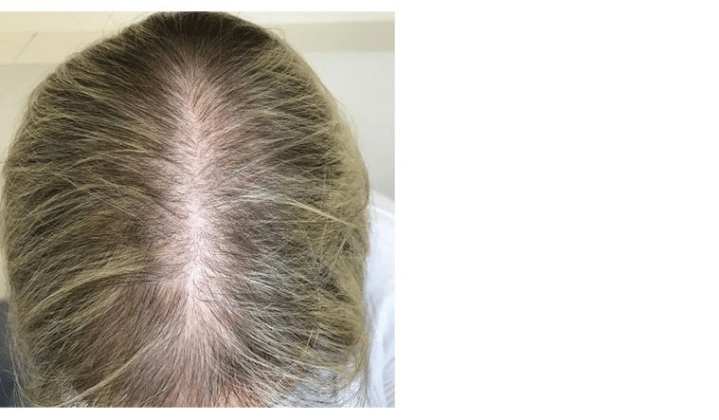
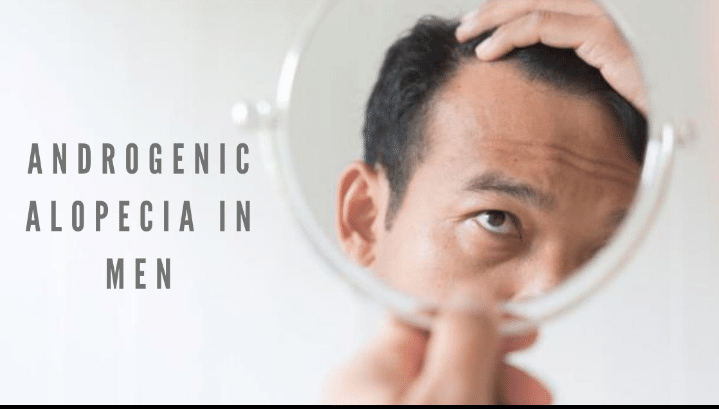
is the most common cause of hair loss in both men and women. It is a hereditary condition in which hair follicles gradually shrink (miniaturize), leading to thinner, shorter hair and eventually reduced hair growth.
In men, it usually causes a receding hairline and thinning at the crown. In women, it typically causes diffuse thinning over the top of the scalp while the frontal hairline is often preserved.
Causes of Androgenetic Alopecia
The condition develops due to a combination of:
- Genetics (Family History) – Hair loss can run in families.
- Hormones – Hair follicles become sensitive to a hormone called DHT (dihydrotestosterone).
- Ageing – Hair growth naturally slows with age.
- Environmental Factors – Stress, nutrition, and lifestyle may influence the severity.
Signs and Symptoms
In Men
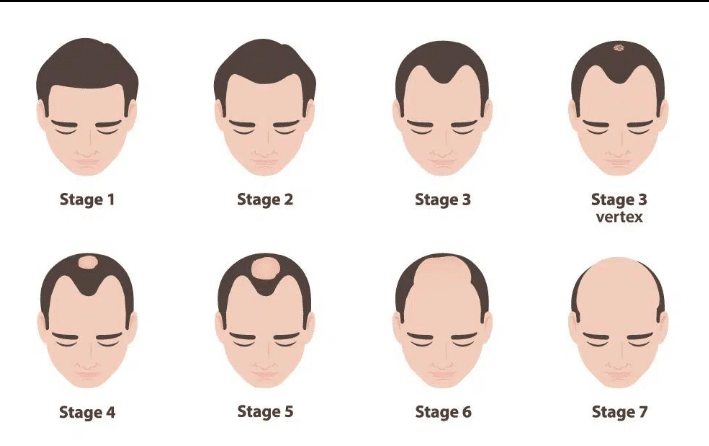
- Receding hairline
- Thinning at the crown
- Gradual development of bald patches
In Women
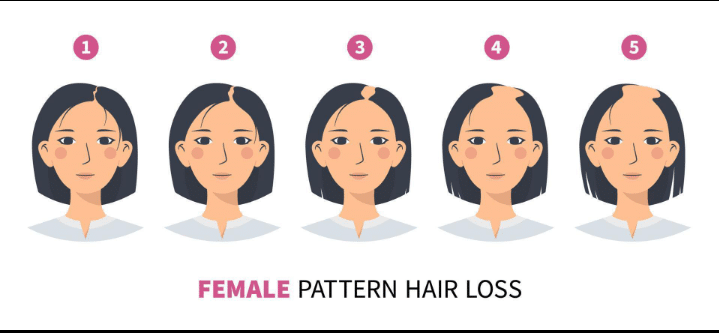
- Widening of the hair part
- Diffuse thinning on the scalp
- Reduced hair volume
How Does It Affect Hair?
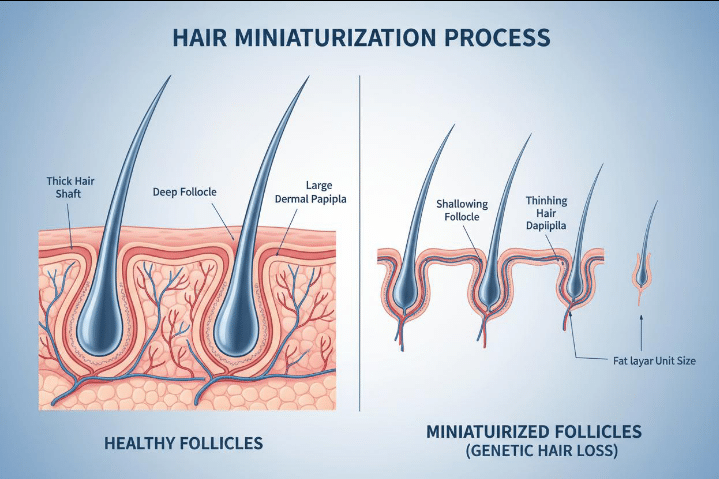
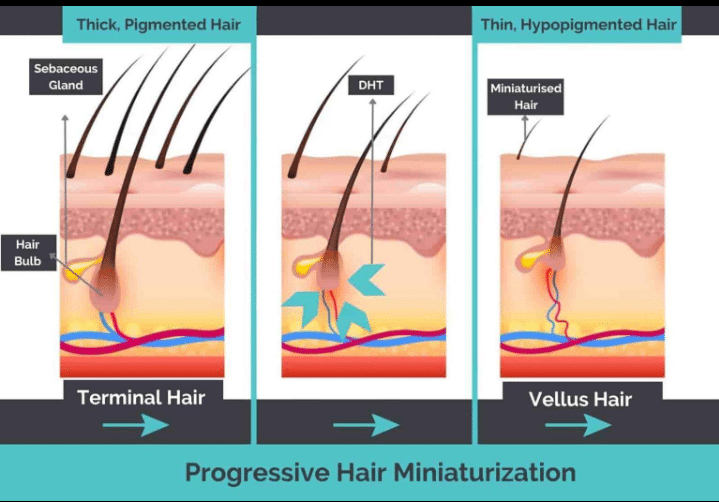
During androgenetic alopecia:
- Hair follicles become smaller.
- Hair strands grow thinner.
- Hair growth cycles shorten.
- New hairs may eventually stop growing.
Diagnosis
A healthcare professional may diagnose androgenetic alopecia through:
- Medical history
- Family history
- Scalp examination
- Hair-pull test
- Blood tests (if other causes of hair loss are suspected)
Treatment Options
1. Topical Medications
- may help stimulate hair growth and slow hair loss.
2. Oral Medications
- may be prescribed for suitable patients.
3. Hair Transplant Surgery
- Hair follicles are moved from donor areas to thinning or bald areas.
4. Low-Level Laser Therapy
- May help improve hair density in some individuals.
5. Healthy Lifestyle
- Balanced diet
- Adequate protein intake
- Stress management
- Proper hair care
Prevention Tips
Although genetic hair loss cannot always be prevented, you can:
- Maintain a nutritious diet.
- Avoid excessive heat and harsh chemical treatments.
- Manage stress effectively.
- Seek early treatment when hair thinning begins.
Frequently Asked Questions (FAQ)
1. Is androgenetic alopecia permanent?
It is generally a long-term condition, but treatments can slow progression and sometimes improve hair growth.
2. At what age does it start?
It can begin during the late teens, 20s, or later in adulthood.
3. Can women develop androgenetic alopecia?
Yes. Female pattern hair loss is a common form of androgenetic alopecia.
4. Does wearing hats cause hair loss?
No. Wearing hats does not cause androgenetic alopecia.
5. Can hair grow back naturally?
Some people experience limited regrowth, but medical treatment is often needed for noticeable improvement.
6. Is hair transplantation a permanent solution?
Transplanted hairs are generally long-lasting, but existing non-transplanted hairs may continue to thin over time.
7. Does stress cause androgenetic alopecia?
Stress does not directly cause it, but it can worsen overall hair shedding and make the condition more noticeable.
8. Is it contagious?
No. Androgenetic alopecia cannot spread from one person to another.
Conclusion
Androgenetic alopecia is the most common type of hair loss worldwide. It occurs due to genetic and hormonal factors that gradually shrink hair follicles. Early diagnosis and appropriate treatment can help slow hair loss, maintain hair density, and improve confidence. If you notice persistent hair thinning or a receding hairline, consulting a dermatologist can help determine the best management plan for your individual needs.