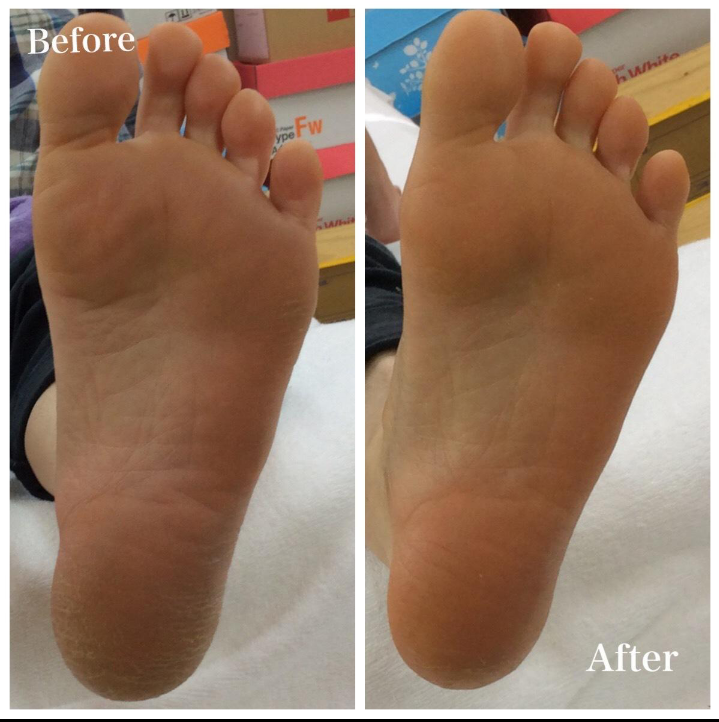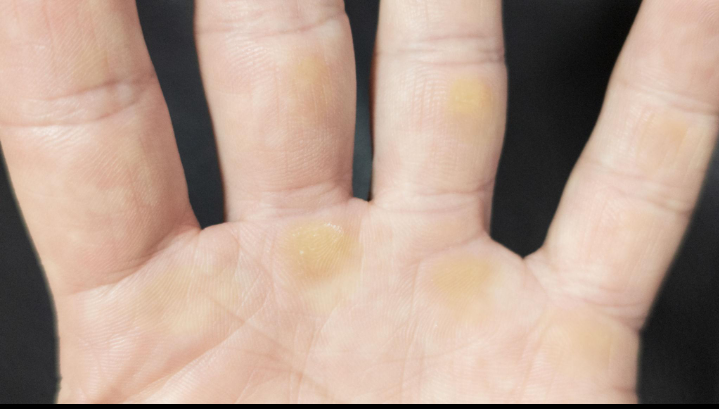
What is a Callus (Callosity)?
A callus (callosity) is a thickened, hardened area of skin that develops due to repeated friction, pressure, or rubbing. It is the body’s natural protective response and most commonly appears on the feet and hands.
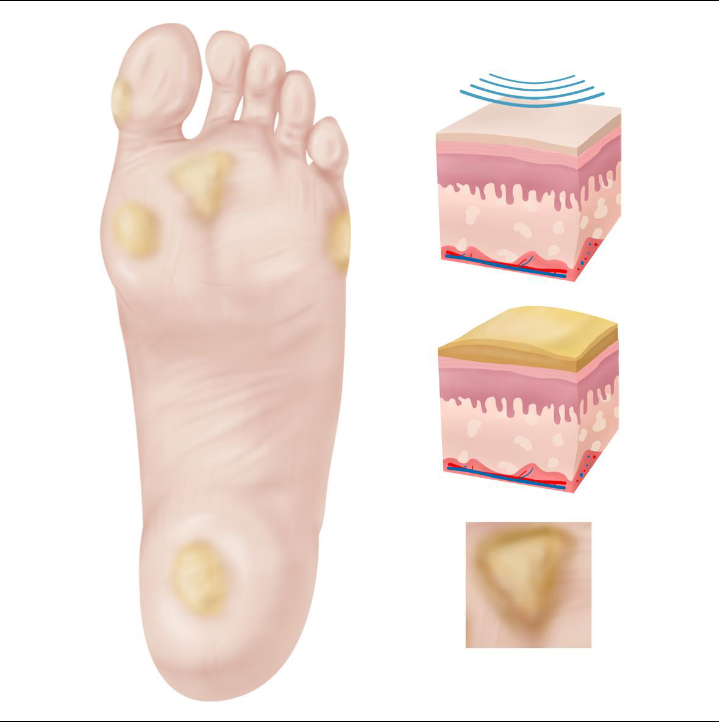
CALLUS ( CALLOSITY )
Unlike corns, calluses are usually larger, flatter, and less painful.
Causes of Callus
- Repeated pressure while walking or standing
- Wearing tight or ill-fitting shoes
- Walking barefoot frequently
- Manual labor or repeated use of tools
- Foot deformities (bunions, hammertoes)
- Diabetes or abnormal gait (requires careful evaluation)
Symptoms
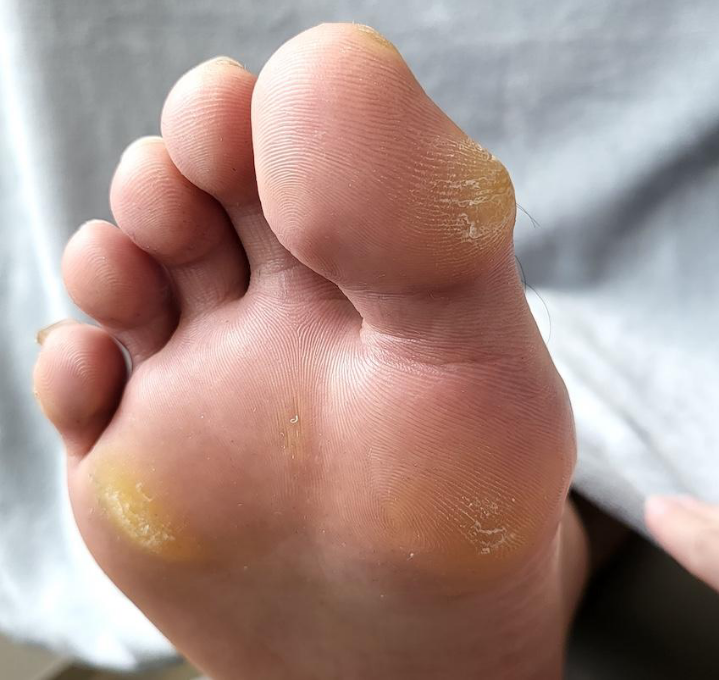
- Thick, rough, or hard skin
- Yellowish or grayish patch
- Dry or cracked skin
- Mild discomfort while walking
- Pain if the callus becomes very thick or develops cracks
Risk Factors
- Poorly fitting footwear
- Long periods of standing
- Athletes and runners
- Obesity
- Foot deformities
- Diabetes and peripheral neuropathy
Diagnosis
A doctor usually diagnoses a callus through a physical examination. In some cases, additional tests may be needed to identify abnormal pressure points or underlying foot problems.
Treatment
Home Care
- Soak the affected area in warm water.
- Gently use a pumice stone to reduce thickened skin.
- Apply moisturizing creams containing urea or salicylic acid (only if appropriate).
- Wear properly fitted footwear.
- Use protective pads or cushioned insoles.
Medical Treatment
- Professional trimming of thickened skin
- Treatment of underlying foot deformities
- Custom orthotic insoles
- Surgery (rarely required)
Important: People with diabetes should not attempt to cut or shave calluses at home because of the risk of infection.
Prevention
- Wear comfortable, well-fitting shoes.
- Use cushioned socks.
- Keep feet moisturized.
- Avoid excessive friction.
- Inspect your feet regularly, especially if you have diabetes.
- Use protective gloves during manual work.
Possible Complications
- Pain while walking
- Skin cracks (fissures)
- Infection
- Foot ulcers in people with diabetes
Frequently Asked Questions (FAQ)
1. What is the difference between a corn and a callus?
A callus is larger and usually painless, while a corn is smaller, has a central core, and is often painful.
2. Can a callus go away on its own?
Yes. If the source of pressure or friction is removed, a callus may gradually soften and disappear.
3. Are calluses dangerous?
Most are harmless, but they can become painful or infected, especially in people with diabetes.
4. Can I remove a callus at home?
You can soften and gently reduce it using warm water, a pumice stone, and moisturizer. Avoid cutting it with sharp objects.
5. When should I see a doctor?
See a doctor if the callus is painful, bleeding, infected, or if you have diabetes or poor circulation.
6. Can calluses come back?
Yes. They often recur if the underlying pressure or friction continues.
Conclusion
Calluses are a common skin condition caused by repeated pressure or friction. They are generally harmless and can often be managed with proper foot care, comfortable footwear, and regular moisturizing. Persistent, painful, or infected calluses—especially in people with diabetes—should be evaluated by a healthcare professional to prevent complications.