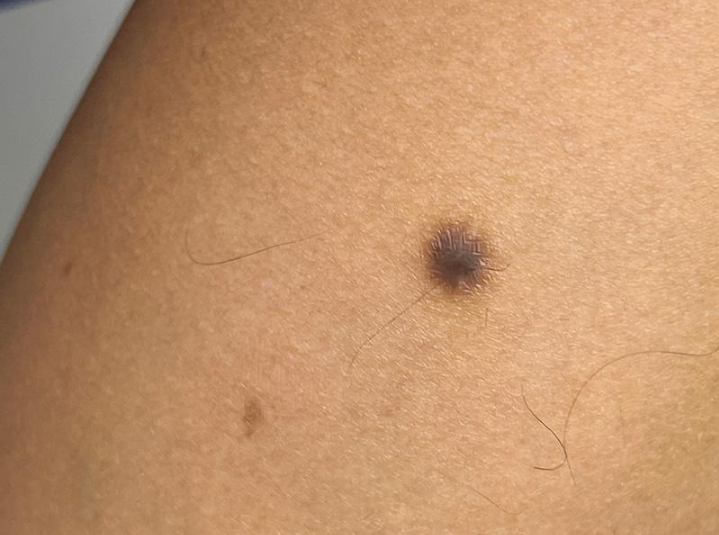
What is a Dermatofibroma?
A Dermatofibroma is a common, harmless (benign) skin growth that usually appears as a small, firm bump on the skin. It most often develops on the legs, arms, or upper back and is more common in adults, especially women. Dermatofibromas are not contagious and do not turn into skin cancer.
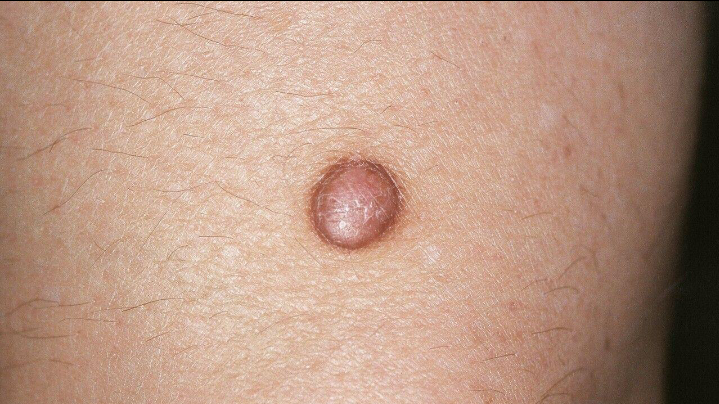
DERMATOFIBROMA
Causes
The exact cause is not always known, but dermatofibromas may develop after:
- Minor skin injuries
- Insect bites
- Thorn pricks
- Ingrown hairs
- Small cuts or trauma to the skin
Signs and Symptoms
Common Features:
- Small, round or oval bump
- Firm texture
- Brown, red, pink, or skin-colored appearance
- Usually less than 1 cm in diameter
- May be itchy or tender occasionally
Dimple Sign
When the lesion is squeezed from the sides, it often forms a small dimple in the center. This is known as the “dimple sign”, a characteristic feature of dermatofibroma.
Diagnosis
A dermatologist may diagnose dermatofibroma through:
- Physical examination
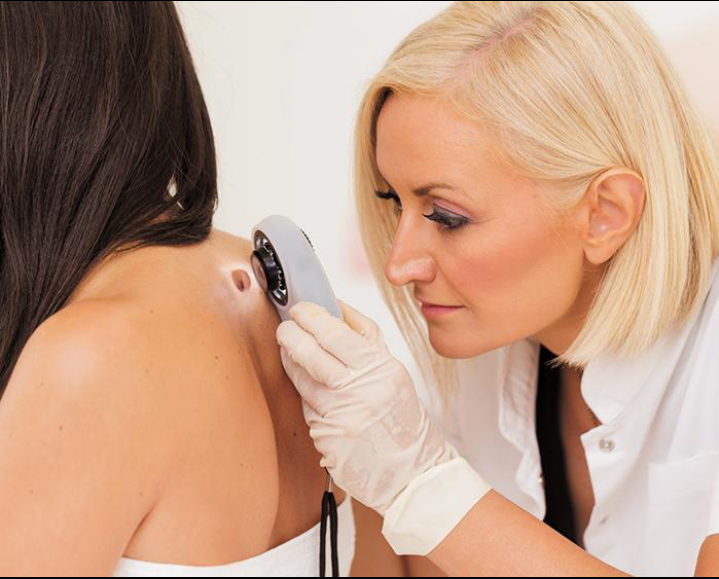
- Dermatoscopy (skin surface examination)
- Skin biopsy (if diagnosis is uncertain)
Treatment
Most dermatofibromas do not require treatment.
Treatment Options:
- Observation and reassurance
- Surgical excision
- Cryotherapy (freezing)
- Laser treatment for cosmetic improvement
Note: Surgical removal may leave a scar.
Prevention
Since the exact cause is uncertain, prevention is difficult. However:
- Protect skin from injuries
- Treat insect bites promptly
- Maintain good skin hygiene
Frequently Asked Questions (FAQ)
1. Is dermatofibroma cancerous?
No. Dermatofibroma is a benign skin growth and is not considered cancer.
2. Can dermatofibroma disappear on its own?
Some lesions may become less noticeable over time, but most remain stable for years.
3. Is treatment necessary?
Usually not. Treatment is mainly for cosmetic reasons or if the lesion causes discomfort.
4. Can dermatofibroma come back after removal?
Yes, recurrence can occur, although complete surgical excision reduces the risk.
5. Is dermatofibroma contagious?
No. It cannot spread from one person to another.
6. Who is more likely to develop dermatofibroma?
Adults, especially women, are more commonly affected.
7. When should I see a doctor?
Consult a dermatologist if the lesion:
- Changes rapidly in size or color
- Bleeds repeatedly
- Becomes painful
- Has an unusual appearance
Conclusion
Dermatofibroma is a common and harmless skin condition that appears as a firm, small skin nodule. Although it may resemble other skin lesions, it is generally benign and requires no treatment unless it causes symptoms or cosmetic concerns. A dermatologist can confirm the diagnosis and recommend appropriate management when necessary. Early evaluation of any changing skin lesion is always advisable for peace of mind and proper care. 🌿💖