Dermatoscopy, also known as dermoscopy or epiluminescence microscopy, is a non-invasive diagnostic technique used by dermatologists to examine skin lesions in detail. It helps in the early detection of skin cancers and other skin disorders by visualizing structures that are not visible to the naked eye.
In recent years, dermatoscopy has become an essential part of dermatology practice because of its high accuracy, safety, and convenience.
What is Dermatoscopy?
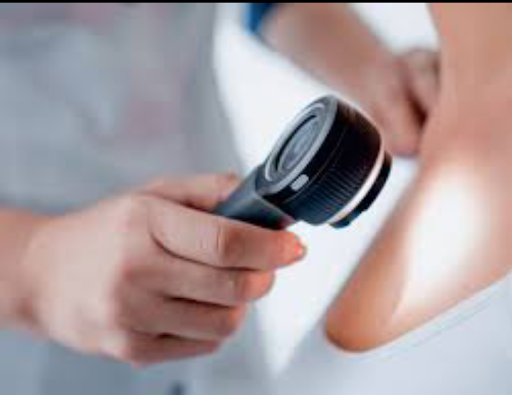
Dermatoscopy is a method of examining the skin using a handheld device called a dermatoscope. This device has:
- A magnifying lens
- A light source (polarized or non-polarized)
- Sometimes a digital camera for image storage
It allows doctors to see pigmentation patterns, blood vessels, and skin structures clearly, which helps in better diagnosis.
How Does Dermatoscopy Work?
The dermatoscope is placed directly on the skin after applying a liquid interface (oil, gel, or alcohol) or using polarized light. This reduces skin surface reflection and allows deeper skin layers to be visualized.Dermatoscopy helps differentiate between benign (non-cancerous) and malignant (cancerous) skin lesions without the need for immediate biopsy.
Uses of Dermatoscopy
Dermatoscopy is widely used for diagnosing:
- Skin cancers
- Melanoma
- Basal cell carcinoma
- Squamous cell carcinoma
- Pigmented skin lesions
- Moles (nevi)
- Freckles
- Lentigines
- Hair and scalp disorders (Trichoscopy)
- Alopecia areata
- Androgenetic alopecia
- Nail disorders (Onychoscopy)
- Nail pigmentation
- Subungual hematoma
- Inflammatory skin diseases
- Psoriasis
- Lichen planus
- Scabies patterns
Advantages of Dermatoscopy
- Non-invasive and painless
- Quick procedure
- Improves diagnostic accuracy
- Helps reduce unnecessary biopsies
- Useful for early detection of skin cancer
Dermatoscopy vs Naked Eye Examination
| Feature | Naked Eye | Dermatoscopy |
| Magnification | No | Yes |
| Visualization of deep structures | Limited | Clear |
| Diagnostic accuracy | Moderate | High |
| Early cancer detection | Difficult | Easier |
When is Dermatoscopy Needed?
You may need dermatoscopy if you notice:
- A change in size, shape, or color of a mole
- Non-healing skin lesions
- Rapidly growing skin spots
- New pigmented lesions after age 30
Is Dermatoscopy Safe?
Yes, dermatoscopy is completely safe, painless, and does not use radiation. It can be repeated multiple times without any side effects.
FAQ (Frequently Asked Questions)
1. Is dermatoscopy painful?
No, it is a painless and non-invasive procedure.
2. Can dermatoscopy detect skin cancer?
Yes, it significantly improves the early detection of skin cancers like melanoma.
3. Is a biopsy always needed after dermatoscopy?
Not always. Many benign lesions can be diagnosed without biopsy.
4. How long does the test take?
Usually only a few minutes per lesion.
5. Can dermatoscopy be done in children?
Yes, it is safe for all age groups.
Conclusion
Dermatoscopy is a powerful and advanced diagnostic tool that helps in the early and accurate diagnosis of skin diseases and skin cancers. Its non-invasive nature and high accuracy make it an essential part of modern dermatology practice.