Introduction
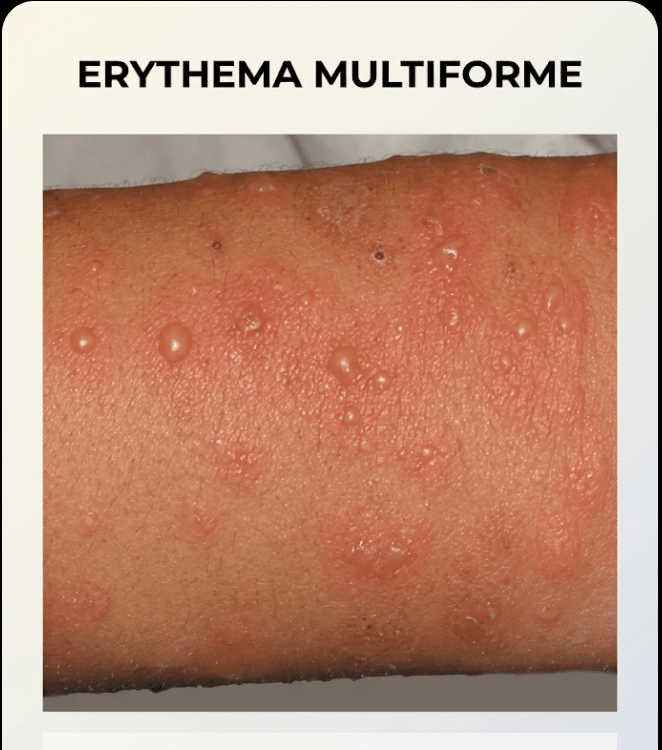
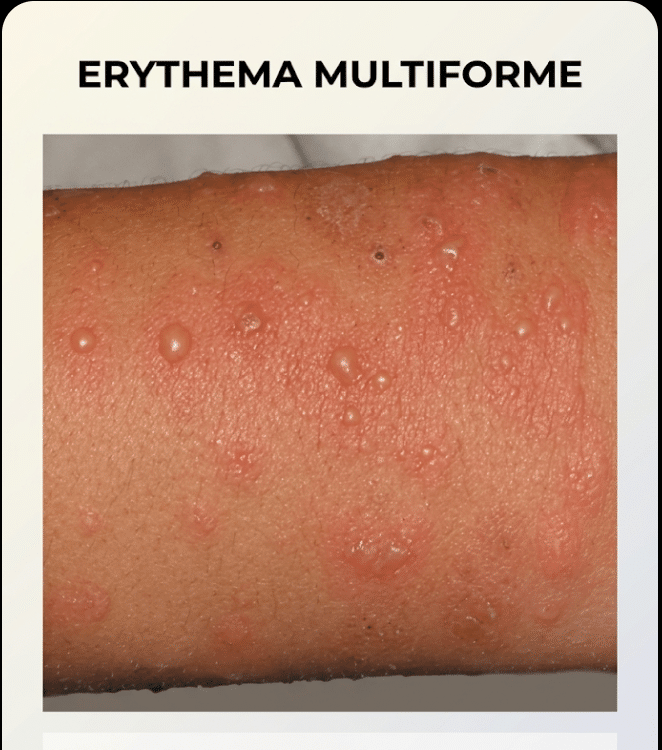
Erythema Multiforme (EM) is a skin condition that causes sudden red patches, target-shaped spots, or sores on the skin. It is usually a reaction to an infection or certain medicines. The condition can look alarming, but many cases are mild and improve with treatment.
It commonly affects the hands, feet, arms, legs, and sometimes the mouth or lips.
What is Erythema Multiforme?
Erythema Multiforme is an immune-related skin reaction. It happens when the body overreacts to triggers such as infections or medications. The rash often appears suddenly and may spread over a few days.
There are two main types:
1. Erythema Multiforme Minor
- Mild form
- Mainly affects the skin
- Little or no mouth involvement
2. Erythema Multiforme Major
- More severe form
- Affects skin and mucous membranes (mouth, eyes, genitals)
- Needs medical attention quickly
Causes of Erythema Multiforme
Common Causes Include:
1. Infections
The most common cause is infection, especially:
- Herpes Simplex Virus (cold sores)
- Respiratory infections
- Mycoplasma infection
2. Medicines
Some medicines can trigger EM, such as:
- Antibiotics
- Painkillers
- Anti-seizure medicines
3. Other Triggers
- Vaccines (rarely)
- Immune reactions
- Unknown causes
Symptoms of Erythema Multiforme
Skin Symptoms:
- Red patches or raised spots
- Target lesions (rings with dark center)
- Itching or burning
- Rash on hands, feet, face, arms, or legs
Mouth and Other Symptoms:
- Painful mouth ulcers
- Cracked lips
- Difficulty eating or swallowing
- Eye irritation
- Fever (sometimes)
What Do Target Lesions Look Like?
A target lesion has:
- Dark center
- Pale middle ring
- Red outer ring
This is a classic sign of Erythema Multiforme.
Diagnosis
Doctors diagnose EM by:
- Physical examination
- Medical history
- Looking at rash shape
- Blood tests (sometimes)
- Skin biopsy (if needed)
Treatment of Erythema Multiforme
Mild Cases:
- Rest
- Hydration
- Antihistamines for itching
- Pain relief medicines
- Skin creams
If Caused by Infection:
- Antiviral medicines (for herpes)
- Antibiotics (if bacterial infection)
Severe Cases:
- Hospital care
- IV fluids
- Steroids (sometimes)
- Eye specialist care if eyes are affected
Home Care Tips
- Avoid scratching
- Drink plenty of fluids
- Eat soft foods if mouth sores are painful
- Keep skin clean
- Avoid medicines that triggered the rash
Complications
Though many cases heal well, complications may include:
- Dehydration
- Eye damage
- Skin infection
- Recurrence (comes back again)
Prevention
- Treat herpes infections early
- Avoid known trigger medicines
- Maintain immunity
- Consult doctor if rash appears repeatedly
Frequently Asked Questions (FAQ)
1. Is Erythema Multiforme contagious?
No, EM itself is not contagious. But infections causing it may spread.
2. Is Erythema Multiforme dangerous?
Mild cases are usually not dangerous. Severe cases need urgent treatment.
3. How long does it last?
Usually 2 to 4 weeks.
4. Can it come back again?
Yes, especially if linked to herpes infection.
5. Is it the same as Stevens-Johnson Syndrome?
No. They are different conditions, though symptoms may look similar.
6. Should I see a doctor?
Yes, especially if rash spreads, mouth sores appear, or eyes are affected.
Conclusion
Erythema Multiforme is a skin reaction that often appears as target-shaped red spots. It may be caused by infections or medicines. Most mild cases recover within a few weeks, but severe cases require urgent medical care. Early diagnosis and proper treatment help prevent complications and improve recovery.