⭐INTRODUCTION
Flexural psoriasis, also known as inverse psoriasis, is a type of psoriasis that mainly affects skin folds. Unlike common psoriasis that causes thick, scaly patches, flexural psoriasis appears smooth, red, and shiny. Because it develops in moist areas, it is often confused with fungal or bacterial infections.
This condition can be uncomfortable and emotionally distressing, but with proper care and treatment, symptoms can be well controlled 🌿
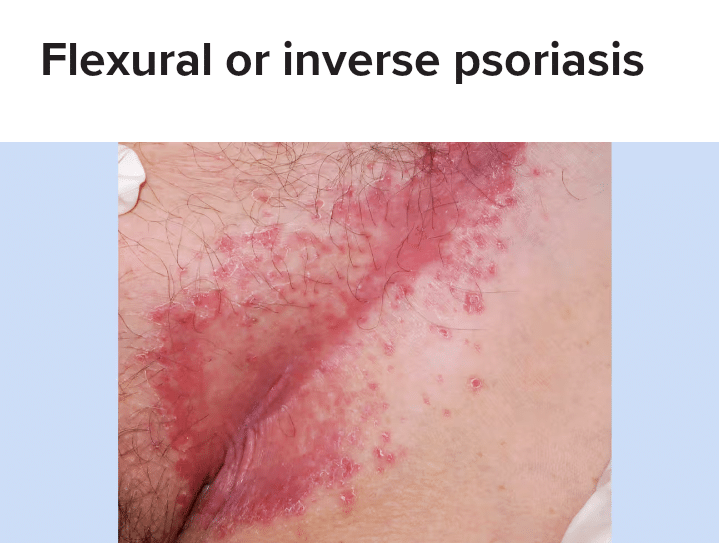
⭐What Is Flexural (Inverse) Psoriasis?
Flexural psoriasis is a chronic autoimmune skin disorder where the immune system speeds up skin cell production. It usually occurs in areas where skin rubs together, such as:
- Armpits
- Groin
- Under breasts
- Between buttocks
- Around genitals
- Skin folds of the neck or abdomen
NOTE :-
Because these areas stay warm and moist, scaling is minimal, but redness and irritation are intense.
⭐Symptoms of Flexural Psoriasis
Common signs include:
- Smooth, shiny red patches
- Severe itching or burning sensation
- Pain or soreness in skin folds
- Cracking or bleeding due to friction
- Worsening with sweat and heat
⚠️ NOTE :-
Unlike fungal infections, these patches do not usually have a white center or raised border.
⭐Causes and Risk Factors
Flexural psoriasis occurs due to a combination of factors:
- Genetic predisposition
- Overactive immune system
- Obesity (more skin folds)
- Excessive sweating
- Friction from tight clothing
- Stress and hormonal changes
- Secondary fungal or bacterial infections
⭐How Is It Diagnosed?
Doctors diagnose flexural psoriasis through:
- Physical examination
- Medical history
- Ruling out fungal infections (sometimes with skin tests)
NOTE :-
Correct diagnosis is important because wrong treatment can worsen symptoms.
⭐Treatment Options
Treatment focuses on reducing inflammation and preventing infection:
- Low-potency topical corticosteroids
- Vitamin D analog creams
- Antifungal or antibacterial creams (if infection is present)
- Moisturizers to reduce friction
- Lifestyle changes like weight management and breathable clothing
⚕️ NOTE :-
Always use medicines under medical supervision, especially in sensitive areas.
⭐Self-Care and Prevention Tips
- Keep affected areas clean and dry
- Wear loose, cotton clothing
- Avoid harsh soaps and perfumes
- Maintain a healthy weight
- Manage stress with yoga or meditation
- Avoid excessive sweating
NOTE :-
Small daily habits can make a big difference 💚
💐Frequently Asked Questions (FAQ)
1. Is flexural psoriasis contagious?
No, flexural psoriasis is not contagious and cannot spread through touch.
2. Can it be cured permanently?
There is no permanent cure, but symptoms can be effectively managed with treatment.
3. How is it different from fungal infection?
Flexural psoriasis is autoimmune, while fungal infections are caused by fungi. Treatments are completely different.
4. Does sweating worsen inverse psoriasis?
Yes, sweat and moisture can irritate the skin and worsen symptoms.
5. Is it safe to use steroid creams?
Low-strength steroids may be used for short periods under medical guidance.
6. Can diet help control symptoms?
A balanced diet, weight control, and anti-inflammatory foods may help reduce flare-ups.
🌺Conclusion
Flexural (inverse) psoriasis is a sensitive but manageable condition. Early diagnosis, correct treatment, and proper skin care can greatly reduce discomfort and improve quality of life. If symptoms persist or worsen, consulting a dermatologist is essential. With patience and the right approach, people with flexural psoriasis can live confidently and comfortably 🌸 😊