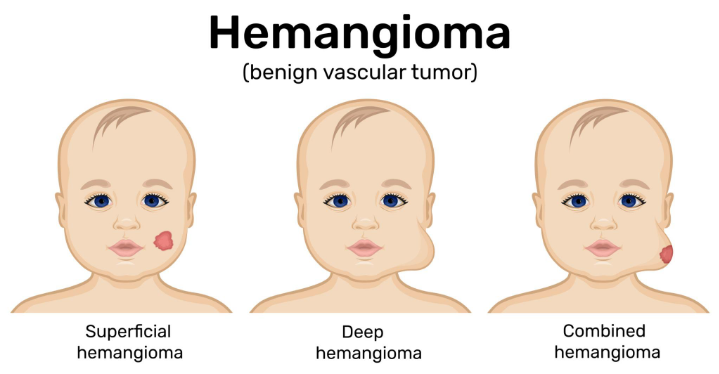
What Is a Hemangioma?
A hemangioma is a non-cancerous (benign) growth of blood vessels. It commonly appears during infancy as a red or purple birthmark and is often called a “strawberry mark.” Most hemangiomas grow rapidly during the first few months of life and then gradually shrink over several years without treatment.
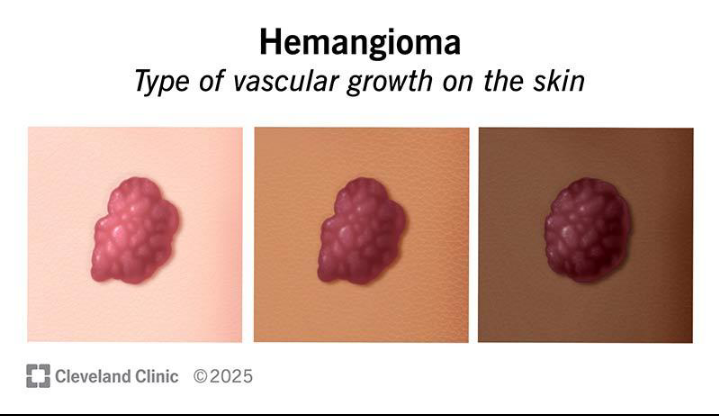
Types of Hemangiomas
- Infantile Hemangioma: Appears shortly after birth and is the most common type.
- Congenital Hemangioma: Fully developed at birth.
- Capillary Hemangioma: Located near the skin surface and bright red in color.
- Cavernous Hemangioma: Lies deeper under the skin and appears bluish.
Causes
The exact cause is unknown. Researchers believe hemangiomas develop due to abnormal growth of blood vessels during fetal development. They are more common in:
- Girls
- Premature babies
- Babies with low birth weight
- Multiple births (twins or triplets)
Symptoms
- Bright red or bluish skin lump
- Soft, raised swelling
- Rapid growth during infancy
- Usually painless
- Rarely, ulceration or bleeding may occur
Diagnosis
Doctors usually diagnose hemangiomas through:
- Physical examination
- Ultrasound
- MRI or CT scan (for deeper lesions)
- Rarely, biopsy
Treatment
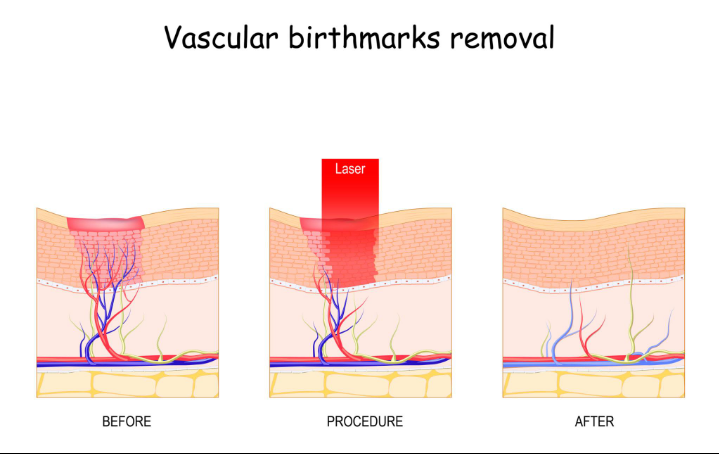
Many hemangiomas require only observation. Treatment may include:
- Beta-blocker medications (such as )
- Topical medications
- Laser therapy
- Corticosteroids (less commonly used today)
- Surgery for selected cases
Possible Complications
- Ulceration
- Infection
- Bleeding
- Vision or breathing problems (depending on location)
- Permanent skin changes after shrinking
Frequently Asked Questions (FAQ)
1. Is a hemangioma cancer?
No. Hemangiomas are benign (non-cancerous) blood vessel growths.
2. Do hemangiomas disappear on their own?
Yes. Most infantile hemangiomas gradually shrink and fade during childhood.
3. Are hemangiomas painful?
Usually no. They may become painful if they ulcerate or become infected.
4. Can adults develop hemangiomas?
Yes. Adults can develop hemangiomas, particularly in the skin or internal organs such as the liver.
5. When should I see a doctor?
Consult a doctor if the hemangioma grows rapidly, bleeds, becomes painful, ulcerates, or affects vision, breathing, feeding, or hearing.
6. Can hemangiomas come back after treatment?
Most do not recur after successful treatment, although some skin changes may remain.
Conclusion
Hemangiomas are common, benign blood vessel tumors that usually appear in infancy. Most resolve naturally with time, while some require medical treatment because of their size, location, or complications. Early medical evaluation helps ensure the best outcome and prevents problems when intervention is needed.
Note: This blog is for educational purposes only and should not replace professional medical advice. If you notice a suspicious or rapidly growing skin lesion, consult a qualified healthcare professional.