⭐INTRODUCTION
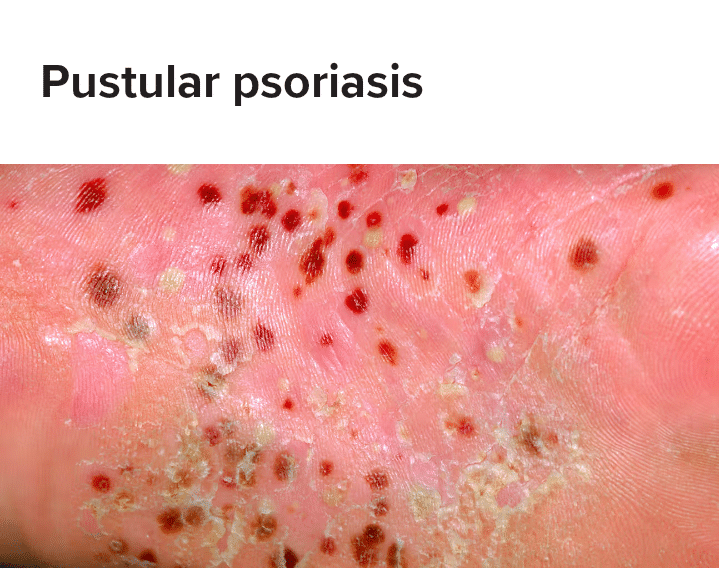
Pustular psoriasis is a rare but severe form of psoriasis characterized by white or yellow pus-filled blisters (pustules) surrounded by red, inflamed skin. Unlike infectious skin diseases, these pustules are not contagious. This condition needs timely medical care because some types can be serious and even life-threatening.
⭐What Is Pustular Psoriasis?
Pustular psoriasis is an autoimmune skin disorder where the immune system becomes overactive and speeds up skin cell production. This leads to painful pustules, redness, and scaling. It can appear suddenly and may be triggered by certain factors such as infections, stress, or medications.
⭐Types of Pustular Psoriasis
1. Generalized Pustular Psoriasis (GPP)
- A severe and emergency condition
- Widespread pustules over the body
- Accompanied by fever, chills, fatigue, and dehydration
- Requires immediate hospitalization
2. Palmoplantar Pustulosis (PPP)
- Affects palms of hands and soles of feet
- Causes painful pustules and cracking
- Common in smokers
3. Localized Pustular Psoriasis
- Limited to specific areas like fingers or toes
- Less severe but can still be painful
⭐Common Symptoms
- Pus-filled blisters on red skin
- Burning or itching sensation
- Fever and chills (in severe cases)
- Fatigue and weakness
- Skin peeling after pustules dry
⭐Causes and Triggers
While the exact cause is unknown, common triggers include:
- Sudden stopping of steroid medicines
- Infections (especially throat infections)
- Stress and anxiety
- Smoking
- Pregnancy
- Certain medications (lithium, beta-blockers)
⭐Diagnosis
Doctors diagnose pustular psoriasis through:
- Clinical examination
- Medical history
- Skin biopsy (if needed)
- Blood tests in severe cases
🌺Treatment Options
Treatment depends on severity and type:
- Topical treatments: corticosteroids, moisturizers
- Oral medications: methotrexate, acitretin
- Biologic therapies: target immune response
- Hospital care for generalized pustular psoriasis
- Lifestyle management: stress control, smoking cessation
⚠️ NOTE :-
Self-medication should be avoided. Always consult a dermatologist.
💐FAQs on Pustular Psoriasis
Q1. Is pustular psoriasis contagious?
No. It is not infectious and cannot spread by touch.
Q2. Is pustular psoriasis curable?
There is no permanent cure, but it can be well-managed with proper treatment.
Q3. Is pustular psoriasis dangerous?
Yes, generalized pustular psoriasis can be life-threatening if untreated.
Q4. Can stress worsen pustular psoriasis?
Yes. Stress is a major trigger and can cause flare-ups.
Q5. Can children get pustular psoriasis?
It is rare but can occur at any age, including childhood.
🌺Conclusion
Pustular psoriasis is a serious and complex skin condition that requires early diagnosis and expert medical care. Though rare, its impact on physical and emotional health can be significant. With timely treatment, lifestyle changes, and regular follow-ups, patients can control flare-ups and improve quality of life. Awareness and proper medical guidance are the keys to managing this condition effectively.