Introduction
Albinism is a rare genetic condition characterized by little or no production of melanin, the pigment responsible for the color of our skin, hair, and eyes. It affects people worldwide, regardless of race or gender. While albinism does not affect intelligence, it can lead to vision problems and increased sensitivity to sunlight.
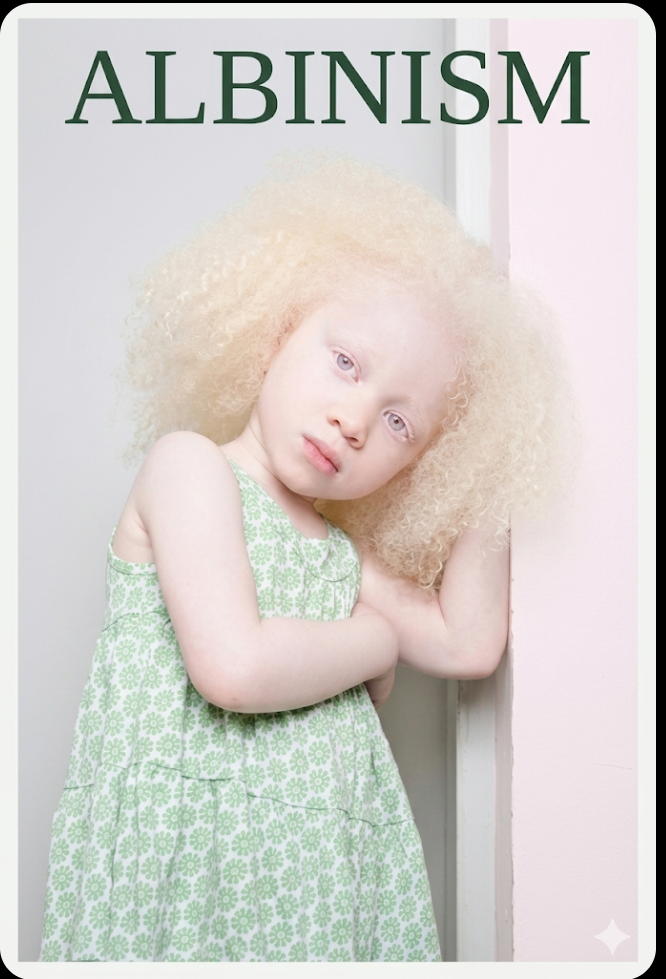
What is Albinism?
Albinism is an inherited disorder caused by mutations in genes involved in melanin production. People with albinism usually have very light skin, white or light-colored hair, and light-colored eyes. However, the degree of pigmentation can vary.
Types of Albinism
- Oculocutaneous Albinism (OCA):
Affects skin, hair, and eyes; the most common type. - Ocular Albinism (OA):
Mainly affects the eyes, with minimal skin or hair involvement. - Hermansky-Pudlak Syndrome (HPS):
A rare type associated with bleeding disorders and lung issues. - Chediak-Higashi Syndrome:
Extremely rare; affects the immune system along with pigmentation.
Causes of Albinism
Albinism is caused by mutations in specific genes that help produce or distribute melanin. It is usually inherited in an autosomal recessive pattern, meaning a child must inherit the defective gene from both parents.
Symptoms of Albinism
- Very light or white skin and hair
- Light-colored eyes (blue, gray, or reddish)
- Vision problems (blurred vision, sensitivity to light)
- Rapid eye movements (nystagmus)
- Increased risk of sunburn and skin cancer
Diagnosis
Albinism is diagnosed through:
- Physical examination
- Eye tests
- Genetic testing
- Family history
Management and Treatment
There is no cure for albinism, but symptoms can be managed:
- Wearing sunglasses to protect eyes
- Using sunscreen to prevent sunburn
- Regular eye check-ups
- Vision aids like glasses or contact lenses
- Protective clothing outdoors
Living with Albinism
People with albinism can live normal, healthy lives with proper care. Awareness and social support are important to reduce stigma and improve quality of life.
Frequently Asked Questions (FAQ)
1. Is albinism a disease?
No, albinism is a genetic condition, not a disease.
2. Can albinism be cured?
There is no cure, but it can be managed effectively.
3. Do people with albinism have poor eyesight?
Yes, most individuals have some level of visual impairment.
4. Is albinism contagious?
No, it is not contagious.
5. Can two normal parents have a child with albinism?
Yes, if both parents carry the gene, their child can inherit albinism.
6. Is albinism common?
It is rare, affecting approximately 1 in 17,000 to 20,000 people globally.
Conclusion
Albinism is a lifelong genetic condition that primarily affects pigmentation and vision. While it presents certain challenges, early diagnosis, proper care, and awareness can help individuals lead fulfilling lives. Promoting understanding and acceptance is key to supporting those with albinism in society.