⭐Introduction
Pityriasis versicolor, also known as tinea versicolor, is a common fungal skin infection. It is caused by an overgrowth of yeast that normally lives on the skin. This condition leads to patchy discoloration of the skin, especially on the chest, back, neck, and upper arms. Although harmless and not contagious, it can be cosmetically concerning for many people.
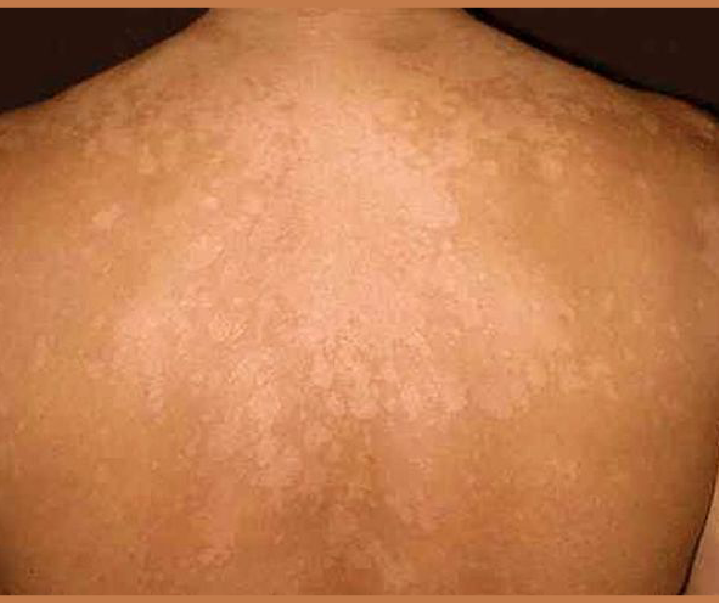
PITYRIASIS VERSICOLOR
🌺What is Pityriasis Versicolor?
Pityriasis versicolor occurs when Malassezia yeast grows excessively on the skin. This yeast interferes with normal skin pigmentation, resulting in lighter or darker patches compared to surrounding skin.
🌺Causes
- Hot and humid climate
- Excessive sweating
- Oily skin
- Weak immune system
- Hormonal changes
- Use of oily skin products
⭐Symptoms
- White, light brown, or pink patches on the skin
- Mild itching (sometimes)
- Fine scaling on patches
- More visible after sun exposure
- Commonly affects chest, back, shoulders, neck, and arms
🌺Who is at Risk?
- Teenagers and young adults
- People living in tropical or humid areas
- Individuals who sweat a lot
- People with oily skin
⭐Diagnosis
- Usually diagnosed by clinical examination
- Wood’s lamp test may show yellow-green fluorescence
- Skin scraping under microscope if needed
💐Treatment
Treatment focuses on controlling the fungal growth:
Topical Treatments
- Antifungal shampoos (ketoconazole, selenium sulfide)
- Antifungal creams or lotions
Oral Medications
- Prescribed in severe or recurrent cases
- Should be taken only under medical supervision
⚠️ NOTE :-
Skin color may take weeks to months to return to normal even after successful treatment.
🌺Prevention Tips
- Keep skin clean and dry
- Avoid excessive heat and sweating
- Wear loose cotton clothing
- Use antifungal shampoo once or twice a month if prone to recurrence
💐Frequently Asked Questions (FAQ)
1. Is pityriasis versicolor contagious?
No, it is not contagious. It occurs due to overgrowth of natural skin yeast.
2. Is it a serious disease?
No, it is a benign condition and mainly a cosmetic concern.
3. Can it come back after treatment?
Yes, recurrence is common, especially in hot and humid weather.
4. Does sunlight cure pityriasis versicolor?
No. Sun exposure may make patches more visible.
5. How long does treatment take?
Fungal infection clears in 2–4 weeks, but skin color recovery may take longer.
6. Can home remedies cure it?
Home remedies may help mildly but medical antifungals are more effective.
⭐Conclusion
Pityriasis versicolor is a common, harmless fungal skin condition that causes temporary skin discoloration. With proper diagnosis and antifungal treatment, it can be effectively controlled. Early treatment and preventive care help reduce recurrence and improve skin appearance. If symptoms persist or frequently return, consulting a dermatologist is recommended.