Introduction
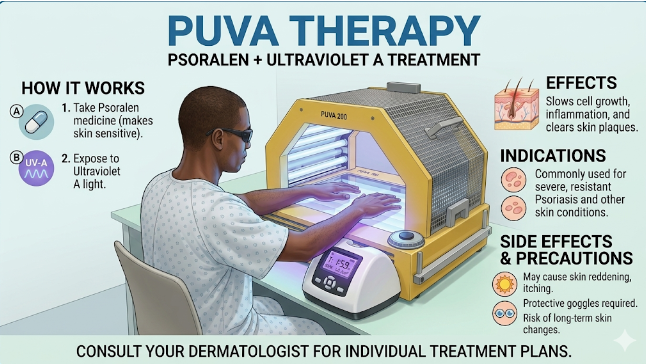
PUVA therapy is a specialized form of photochemotherapy used in dermatology to treat various skin disorders. The term PUVA stands for Psoralen + UVA (Ultraviolet A). It combines a light-sensitizing medication called psoralen with controlled exposure to UVA light to achieve therapeutic effects.
This treatment has been widely used for conditions like psoriasis, vitiligo, eczema, and cutaneous T-cell lymphoma, especially when other treatments fail.
What is PUVA Therapy?
PUVA therapy involves two key steps:
- Administration of Psoralen (oral or topical)
- Exposure to UVA light under medical supervision
Psoralen makes the skin more sensitive to UVA rays, enhancing the effect of light therapy and helping slow down abnormal skin cell growth.
How Does PUVA Therapy Work?
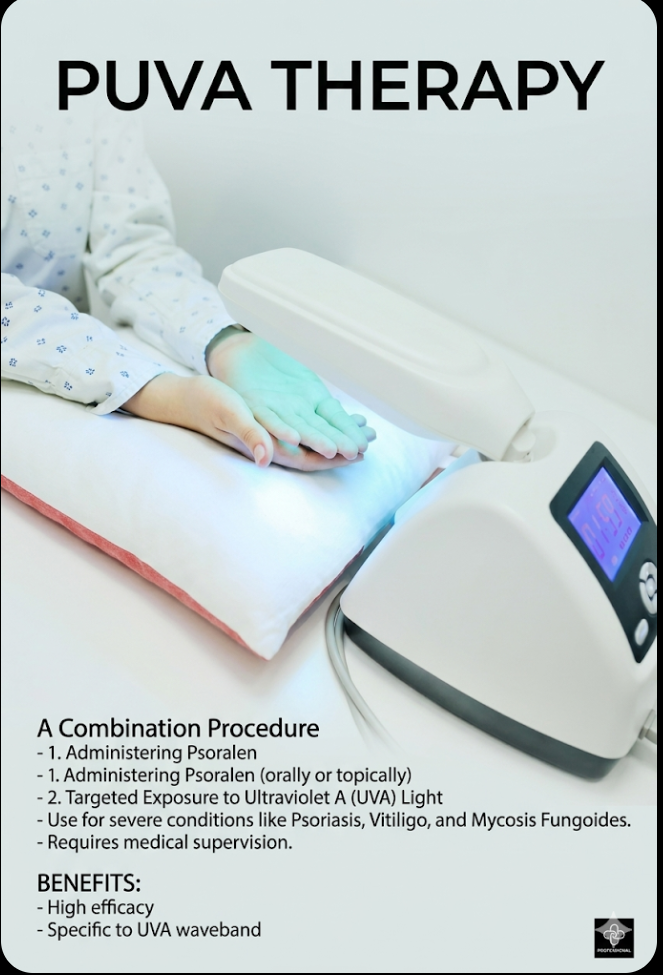
- Psoralen intercalates into DNA of skin cells
- Upon UVA exposure, it forms cross-links with DNA
- This reduces excessive cell proliferation and modulates immune response
As a result, inflammation decreases and skin lesions improve.
Types of PUVA Therapy
- Oral PUVA
- Psoralen tablets are taken before UVA exposure
- Used for widespread skin conditions
- Topical PUVA (Bath or Cream PUVA)
- Psoralen applied directly to affected areas or used in bathwater
- Suitable for localized disease
- PUVA for Hands and Feet
- Special devices target palms and soles
Indications (Uses)
PUVA therapy is effective in:
- Psoriasis
- Vitiligo
- Atopic dermatitis (eczema)
- Lichen planus
- Mycosis fungoides (cutaneous T-cell lymphoma)
- Chronic pruritus
Procedure of PUVA Therapy
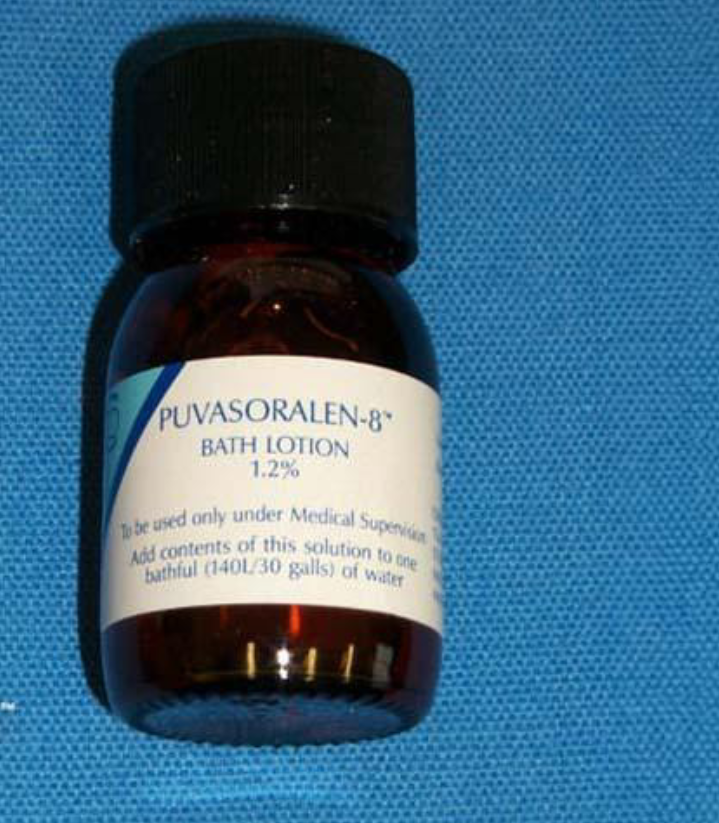
- Patient takes or applies psoralen
- Wait for absorption (usually 1–2 hours for oral PUVA)
- Skin is exposed to UVA light in a phototherapy chamber
- Sessions are repeated 2–3 times per week
NOTE :-
Treatment duration varies depending on the condition and response.
Benefits of PUVA Therapy
- Effective for moderate to severe skin diseases
- Helps in repigmentation in vitiligo
- Reduces scaling and thickness in psoriasis
- Non-invasive treatment option
- Can be combined with other therapies
Side Effects
Short-term effects:
- Redness (sunburn-like reaction)
- Itching
- Nausea (with oral psoralen)
Long-term risks:
- Premature skin aging
- Hyperpigmentation
- Increased risk of skin cancer (with prolonged use)
Precautions During PUVA
- Wear UV-protective sunglasses after oral psoralen
- Avoid direct sunlight exposure for 24 hours
- Use sunscreen regularly
- Follow dermatologist’s dosage strictly
Frequently Asked Questions (FAQ)
1. Is PUVA therapy safe?
Yes, when performed under medical supervision. However, long-term use requires monitoring due to potential risks.
2. How long does it take to see results?
Improvement is usually seen after 15–25 sessions, depending on the condition.
3. Can PUVA cure vitiligo permanently?
PUVA can help in repigmentation, but results vary. Maintenance therapy may be required.
4. Is PUVA better than NB-UVB therapy?
- PUVA is more potent but has more side effects
- NB-UVB is safer and commonly preferred today
5. Can children undergo PUVA therapy?
Generally avoided in children due to long-term risks. NB-UVB is preferred.
6. Do I need to stop other medications?
Some medicines increase photosensitivity. Always inform your doctor before starting PUVA.
7. Is PUVA painful?
No, but some patients may feel mild warmth or irritation during treatment.
8. How many sessions are required?
Typically 20–30 sessions, but it varies based on the condition.
Conclusion
PUVA therapy is a powerful and effective treatment option for several chronic skin diseases, especially when conventional therapies fail. While it offers significant benefits like reducing inflammation and promoting repigmentation, it must be used cautiously due to potential long-term risks. Proper medical supervision, patient compliance, and regular follow-ups are essential to achieve the best outcomes safely.