⭐Introduction
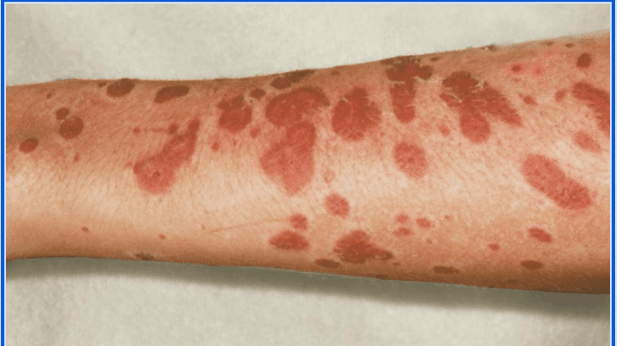
Stevens-Johnson Syndrome (SJS) is a rare but serious disorder of the skin and mucous membranes. It is usually caused by a reaction to medicines or infections. SJS begins with flu-like symptoms and then develops into painful rashes, blisters, and peeling skin. It is a medical emergency and needs immediate treatment in a hospital.
⭐What is Stevens-Johnson Syndrome?
SJS is a severe hypersensitivity reaction that affects the skin, mouth, eyes, nose, and genitals. It causes the top layer of the skin to die and shed. When a larger area of skin is involved, it may progress to Toxic Epidermal Necrolysis (TEN), which is even more dangerous.
⭐Causes of SJS
1. Medications
Many cases of SJS are triggered by medicines, such as:
- Antibiotics (sulfonamides, penicillin)
- Painkillers (NSAIDs like ibuprofen)
- Anti-seizure drugs
- Allopurinol (used for gout)
- Certain HIV medicines
2. Infections
Some infections can also trigger SJS, including:
- Viral infections
- Pneumonia
- Herpes
- Mycoplasma infection
3. Genetic Factors
Some people have certain genes that increase the risk of SJS with specific medicines.
⭐Symptoms of SJS
Early symptoms may include:
- Fever
- Sore throat
- Fatigue
- Body pain
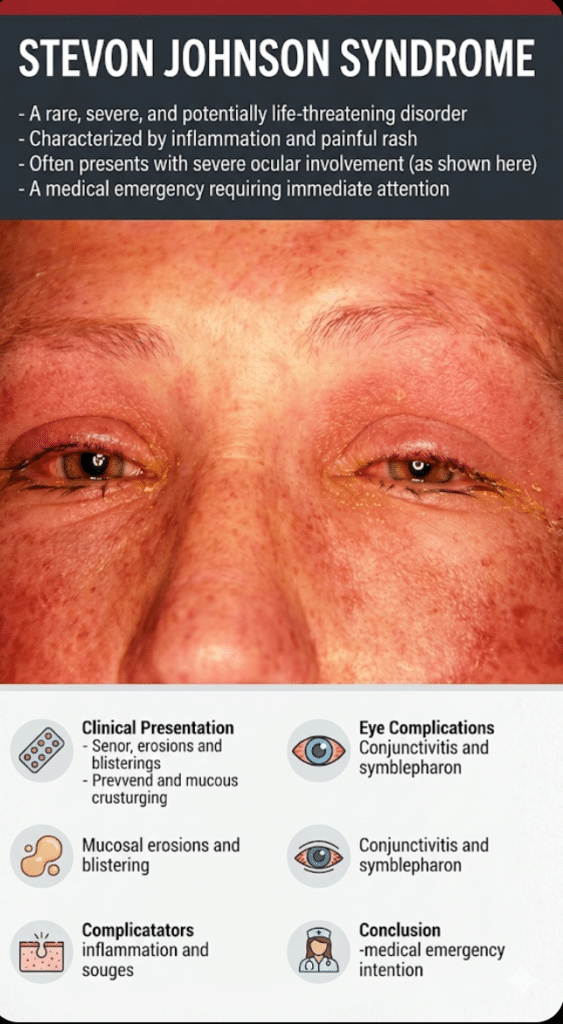
- Burning eyes
Later symptoms include:
- Painful red or purple rash
- Blisters on skin and mouth
- Skin peeling
- Difficulty swallowing
- Eye redness or pain
- Trouble urinating
⭐Diagnosis
Doctors diagnose SJS by:
- Physical examination
- Medical history (recent medicines used)
- Skin biopsy
- Blood tests
⭐Treatment of SJS
SJS requires urgent hospital care. Treatment may include:
1. Stop the Trigger Medicine
The suspected medicine must be stopped immediately.
2. Supportive Care
- IV fluids
- Nutrition support
- Wound care
- Pain relief
3. Medications
Doctors may use:
- Corticosteroids
- IVIG
- Immunosuppressive medicines
4. Eye Care
An eye specialist may be needed to prevent damage.
⭐Complications of SJS
If not treated quickly, SJS can lead to:
- Severe dehydration
- Infection (sepsis)
- Vision loss
- Organ damage
- Scarring
- Death in severe cases
⭐Prevention Tips
- Avoid medicines that caused SJS before
- Inform all doctors about your allergy history
- Wear a medical alert card/bracelet
- Use medicines only under medical advice
💐Frequently Asked Questions (FAQ)
1. Is Stevens-Johnson Syndrome contagious?
No, SJS itself is not contagious.
2. Can SJS be cured?
Yes, many people recover with early treatment, but some may have long-term complications.
3. How long does recovery take?
Recovery may take weeks to months depending on severity.
4. Can SJS happen again?
Yes, if the same triggering medicine is taken again.
5. Is SJS life-threatening?
Yes, it can be life-threatening and needs emergency care.
6. Who is at higher risk?
People taking high-risk medicines, those with weak immunity, or certain genetic backgrounds.
🌺Conclusion
Stevens-Johnson Syndrome is a rare but dangerous condition that should never be ignored. Early symptoms like fever, rash, and blisters after starting a new medicine require immediate medical attention. Quick diagnosis, stopping the trigger, and hospital treatment can save lives. Always use medicines carefully and consult a doctor if unusual symptoms appear.